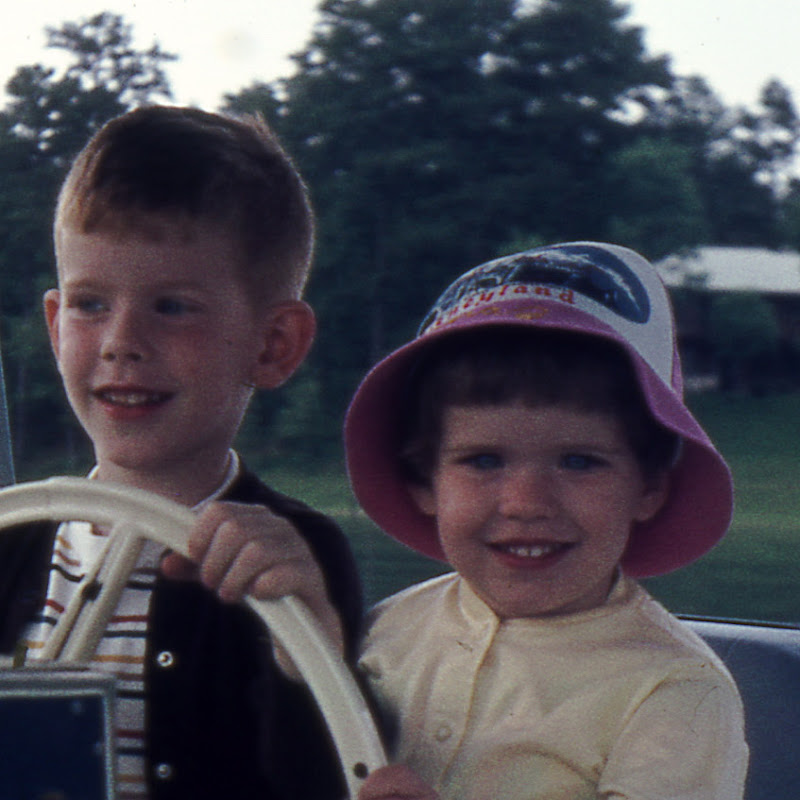
I had the day to myself at work, thanks to (a) spring break absences by the rest of the faculty, and (b) Noel treating the kids to a morning in Little Rock. It's always more difficult for me to be productive when I'm unscheduled. But knowing that both kids would be returning to the office with me tomorrow, one kid would repeat the trip on Thursday, and I'd only have a half-day in the office on Friday due to Noel's trip to the Ozark Foothills FilmFest, I tried to get a start on one of the two big tasks facing me this week.
That task is the creation of a brand new lecture on religious freedom. I'll be giving it to the freshman class on Monday. When I woke up this morning, I immediately began searching for a hook -- something that would give me an entrypoint into the subject. I thought about it while dressing the kids, driving to work, grabbing breakfast. And then I sat at the computer, opened a blank document, and began typing -- tentatively. I had an idea, but it wasn't a very good idea. Still, I knew that I had to get started. I typed six or seven headings and a few subheads. Then I tackled the easiest part of the outline: quotations from state constitutions that mention reliance on Almighty God.
I didn't quite know how I was going to get from here to there, but I knew that I wanted to contrast Jefferson and Madison's determination to keep God out of the federal constitution with the state documents (including Arkansas's constitution, which disqualifies anyone who doesn't believe in a supreme being from holding office or testifying in court). So I went straight to Jefferson's Virginia Statute on Religious Freedom. I copy-and-pasted the whole thing into my outline so I could see which parts I wanted to highlight.
And then the minor inspiration that's desperately needed in these tasks finally struck. The statute had so many interesting points that I began composing brief commentaries on each of them. My outline lengthened, and the other points with which I had begun receded as the lecture began to be structured around the 1785 law.
I didn't finish, but at least I know the idea that will animate the presentation. All writers know that you don't always get to wait for that unifying idea before you have to write. We just feel lucky when one comes along sometime before the writing has to be done.
Later this afternoon, I went to the gym for the first time since October. (Really.) I had no idea whether I'd be able to complete a workout, even reducing my intensity back to levels appropriate for my lapse. And like the Virginia Statute for Religious Freedom, which arrived just in time to save the work I needed to do from being completely worthless, the energy required for thirty minutes of aerobics turned out to be there for me.
Both tasks, though, were just beginnings. There's a lot more work to do on that lecture before it's ready for prime time. And even though a workout after five months is a big change from the sloth that preceded it, by itself it's worthless. I'm glad I accomplished something today, and I'm glad that the parts of those accomplishments that weren't completely under my control happened to work out. It's better than the alternative. But it's just one link in the chain. The forge will have to be fired up again tomorrow.
Tuesday, March 24, 2009


Monday, March 23, 2009
On the bookshelf
Thanks to my recent travels, I've been getting a lot of reading done. And probably not coincidentally, a lot of it has been about religion.
First up was The Believers, Zoe Heller's new novel about the family troubles of a gaggle of radical leftists. One of the most affecting subplots is about a daughter who begins to move toward Orthodox Judaism, much to her aggressively secular socialist mother's dismay. I loved it.
Then came William Lobdell's Losing My Religion, a suspenseful and sad memoir about the conversion then backsliding of the Los Angeles Times religion reporter, who found himself unable to maintain his faith in the face of the Catholic clergy sexual abuse scandals. I couldn't put it down.
And now I'm reading The Unlikely Disciple, Kevin Roose's account of a semester at Liberty University, where he finds the student body generally inspiring and the spiritual tone uplifting, but the atmosphere of absolute certainty (and gay-bashing) impossible to acclimate to. I'm stealing moments during my day to devour it.
Maybe it's that I, too, feel like I'm living in the cracks between faith communities. But these tales of the religious bonds forged among us and the religious differences that wedge us apart are deeply moving to me. I recommend all three of these books, no matter where you find yourself on the spectrum of faith.
First up was The Believers, Zoe Heller's new novel about the family troubles of a gaggle of radical leftists. One of the most affecting subplots is about a daughter who begins to move toward Orthodox Judaism, much to her aggressively secular socialist mother's dismay. I loved it.
Then came William Lobdell's Losing My Religion, a suspenseful and sad memoir about the conversion then backsliding of the Los Angeles Times religion reporter, who found himself unable to maintain his faith in the face of the Catholic clergy sexual abuse scandals. I couldn't put it down.
And now I'm reading The Unlikely Disciple, Kevin Roose's account of a semester at Liberty University, where he finds the student body generally inspiring and the spiritual tone uplifting, but the atmosphere of absolute certainty (and gay-bashing) impossible to acclimate to. I'm stealing moments during my day to devour it.
Maybe it's that I, too, feel like I'm living in the cracks between faith communities. But these tales of the religious bonds forged among us and the religious differences that wedge us apart are deeply moving to me. I recommend all three of these books, no matter where you find yourself on the spectrum of faith.
Sunday, March 22, 2009
Relaxation
On the plane ride from Chicago to Little Rock last night, I had an engaging conversation with my seatmate, a senior basketball player and mass comm major from Missouri Southern. We talked about movies, the former president at my institution, religion (an occupational hazard, since you can't avoid the question "so what do you do?"), and preferred leisure activities. And on the latter, I had to admit, I like sitting on my couch watching TV with my husband, seasoned with the occasional restaurant meal out with my husband where we can have adult conversation.
Does that make me a philistine? I certainly get funny looks when I cheerfully admit to my academic colleagues that I watch reality shows and spend a lot of time on social networking sites. But little makes me feel more at ease than my little corner of the sectional, a microwaved heating pad around my shoulders, my MacBook Air on my lap, a beverage at my side, knitting within easy reach, and a TiVo full of shows I love.
And that's where I am right now, the kids having been corralled into bed. There's some work to do later -- I need to blog Breaking Bad for the TV Club -- but after three straight weekends away and too many nights spent at school during the week, my favorite leisure activity (or is that inactivity?) has been scarce lately.
Right now I'm not only enjoying my preferred mode of relaxation, but I'm looking forward to an entire week of evenings spent exactly this way, thanks to spring break. I am hoping to end it with dinner and a movie with my husband, but in the meantime, you can just pry me off the couch with a crowbar if you need me.
Does that make me a philistine? I certainly get funny looks when I cheerfully admit to my academic colleagues that I watch reality shows and spend a lot of time on social networking sites. But little makes me feel more at ease than my little corner of the sectional, a microwaved heating pad around my shoulders, my MacBook Air on my lap, a beverage at my side, knitting within easy reach, and a TiVo full of shows I love.
And that's where I am right now, the kids having been corralled into bed. There's some work to do later -- I need to blog Breaking Bad for the TV Club -- but after three straight weekends away and too many nights spent at school during the week, my favorite leisure activity (or is that inactivity?) has been scarce lately.
Right now I'm not only enjoying my preferred mode of relaxation, but I'm looking forward to an entire week of evenings spent exactly this way, thanks to spring break. I am hoping to end it with dinner and a movie with my husband, but in the meantime, you can just pry me off the couch with a crowbar if you need me.
Saturday, March 21, 2009
Breakin'!
I feel like I've done nothing but leave home and come back home for the last month. Here I am once again, arriving home hours after the kids went to bed, a suitcase full of dirty clothes and a weekend's worth of catching up to do.
But at least I have a cushion in my transition back to Conway life. It's only Saturday night; I can have my first Sunday at home all month. And next week is spring break. I don't have to go right back to class, although I do have to go to work on Monday. I can take the kids with me to the office, which will simultaneously satisfy their desires -- they've been asking when they could go back since Christmas break -- and give Noel a respite.
There's a lot I've been missing here. Archer's been going through a slight rough patch in his behavior at school, although it's probably nothing serious. I've been unable to participate in the handbell choir's rehearsals for the annual Easter performance, and it's strange to think that I'm going to be sitting it out unless I'm needed as an emergency substitute. My poor teaching assistant has had to lead class three Fridays in a row, and I know it hasn't been easy for her.
And although my travels aren't over (I'm headed to Montreal in early April), I've got almost two weeks before I have to head back to the airport. Even if it weren't spring break, I think it would feel like a vacation.
But at least I have a cushion in my transition back to Conway life. It's only Saturday night; I can have my first Sunday at home all month. And next week is spring break. I don't have to go right back to class, although I do have to go to work on Monday. I can take the kids with me to the office, which will simultaneously satisfy their desires -- they've been asking when they could go back since Christmas break -- and give Noel a respite.
There's a lot I've been missing here. Archer's been going through a slight rough patch in his behavior at school, although it's probably nothing serious. I've been unable to participate in the handbell choir's rehearsals for the annual Easter performance, and it's strange to think that I'm going to be sitting it out unless I'm needed as an emergency substitute. My poor teaching assistant has had to lead class three Fridays in a row, and I know it hasn't been easy for her.
And although my travels aren't over (I'm headed to Montreal in early April), I've got almost two weeks before I have to head back to the airport. Even if it weren't spring break, I think it would feel like a vacation.
Friday, March 20, 2009
Travel writing
I flew from Little Rock to Atlanta today (by way of Dallas -- can't go anywhere without going through Dallas). On the first flight I sat next to a young woman who had a travel diary out on her lap. She had filled up many pages with handwriting. I didn't glance over enough to pick up any of what she wrote -- just the graphics on the pages: passports, suitcases, airplane and boat imagery.
It reminded me of the dozens of travel journals I kept in my youth. Mom and Dad took us kids on some trip or another every summer, and for every trip I kept a notebook. Some were actually just notepads; I remember one multicolored scratchpad, meant for tear-off notes on a desk, that spiraled around in a stacked helix. Others were spiral memo pads, and eventually I started using diaries and blank books. The habit continued at least through my European trip in college.
I wrote about what we ate, where we stopped, what we saw, what I read, what games I played with my brothers. Some of the entries were so cryptic that when I read them later, they seemed surreal and hilarious. I used to keep all these notepads in my desk drawer.
When we moved to Conway, my mom gave me several boxes full of old stuff from my room. I don't know what all is in there; it's all packed away up in the attic, waiting for a rainy day. But I know that some of those travel journals are in there. I can almost see some of the pages, covered with lopsided exclamation marks.
I'm sure that I've forgotten more than I remember, but I remember some of those early efforts very well. In my memory they are bound up with the Fawcett Crest Peanuts paperbacks I got my parents to buy me at rest stops, the pencil sharpeners and paperweights that I took home as souvenirs, the fold-out beds in the motor home, the bunks at Camp Whitbow, the back of the station wagon where we played magnetic backgammon. Travel and writing, travel and thinking, travel and emotion, travel and memory -- they've always gone together for me. And in this season where I am traveling far too much for my taste, at least there is that compensation of having time to reflect.
It reminded me of the dozens of travel journals I kept in my youth. Mom and Dad took us kids on some trip or another every summer, and for every trip I kept a notebook. Some were actually just notepads; I remember one multicolored scratchpad, meant for tear-off notes on a desk, that spiraled around in a stacked helix. Others were spiral memo pads, and eventually I started using diaries and blank books. The habit continued at least through my European trip in college.
I wrote about what we ate, where we stopped, what we saw, what I read, what games I played with my brothers. Some of the entries were so cryptic that when I read them later, they seemed surreal and hilarious. I used to keep all these notepads in my desk drawer.
When we moved to Conway, my mom gave me several boxes full of old stuff from my room. I don't know what all is in there; it's all packed away up in the attic, waiting for a rainy day. But I know that some of those travel journals are in there. I can almost see some of the pages, covered with lopsided exclamation marks.
I'm sure that I've forgotten more than I remember, but I remember some of those early efforts very well. In my memory they are bound up with the Fawcett Crest Peanuts paperbacks I got my parents to buy me at rest stops, the pencil sharpeners and paperweights that I took home as souvenirs, the fold-out beds in the motor home, the bunks at Camp Whitbow, the back of the station wagon where we played magnetic backgammon. Travel and writing, travel and thinking, travel and emotion, travel and memory -- they've always gone together for me. And in this season where I am traveling far too much for my taste, at least there is that compensation of having time to reflect.
Thursday, March 19, 2009
Rebel, rebel
Last week the students in my film class watched Easy Rider and chatted about the kind of cool rebellion that characterized the counterculture. In their blogs, they wrote about figures in their experience of pop culture that embody this same kind of cool. Why not click into a few that interest you and leave an encouraging comment?
- Luke finds a connection between Animal Farm and the Rebel Alliance.
- Hayley makes a pit stop at the Fonz on her way to Dirty Dancing.
- Brittney brings up The Italian Job and Elvis Presley.
- Amy explores drug imagery from That 70's Show to Disney's Alice In Wonderland.
- Lucy takes care of business a la Blow and Goodfellas.
- Jason trips his way through House and Drunken Master.
- John visits Dazed and Confused, The Graduate, and Dead Poets Society.
- Julie risks reefer madness by delving into Pineapple Express and Harold and Kumar Go To White Castle.
- Suzanne locates the link between Rebel Without a Cause and The Truman Show.
- Emileigh sketches the hippie life as seen in Across the Universe.
- Amanda brings up The Breakfast Club and Finding Nemo.
- Anna also has Across the Universe and Pineapple Express on her mind, but she ends with the M.I.A. song "Paper Planes" and Jack Nicholson as the Joker.
- Logan juxtaposes 300 and Ferris Bueller's Day Off.
- And Jerry explores dissidence in One Flew Over the Cuckoo's Nest and V for Vendetta.
Wednesday, March 18, 2009
Poetry and prose
On his last report card, Archer raised his writing grade from 3 ("proficient") to 4 ("advanced"). It's always fascinating to how his mind interprets the assignments. Here are a few samples from the latest batch he brought home. The last one is my favorite.
Winter Poetry [an acrostic]
With some
Ice skates
Now you are ready for winter,
Too
Early to skate -- we're not
Ready yet! We have to wait 'til winter.
President
If I ruled the world I'd write a speech about kindness. And do kind things. And work for president.
Thunder Poem [instructions: "Write a poem telling how thunder makes you feel. Your poem does not have to rhyme. Give your poem a title and write your name at the end."]
How Far Away is the Thunder?
1-2-3-4-5 KABOOM!!
The thunder is 3 miles away.
Lightning. 1-2-3-4. BAM!!
1-2-3. Crash!! 1-2. BANG!
1. BOOM! CRACK!
by Archer
Winter Poetry [an acrostic]
With some
Ice skates
Now you are ready for winter,
Too
Early to skate -- we're not
Ready yet! We have to wait 'til winter.
President
If I ruled the world I'd write a speech about kindness. And do kind things. And work for president.
Thunder Poem [instructions: "Write a poem telling how thunder makes you feel. Your poem does not have to rhyme. Give your poem a title and write your name at the end."]
How Far Away is the Thunder?
1-2-3-4-5 KABOOM!!
The thunder is 3 miles away.
Lightning. 1-2-3-4. BAM!!
1-2-3. Crash!! 1-2. BANG!
1. BOOM! CRACK!
by Archer
Tuesday, March 17, 2009
Education and enterprise
Since I got back home Sunday night from the Transforming Theology kickoff weekend, I've been doing a lot of thinking about the public forum held Saturday night. It was the second event of the weekend that was open to anyone who wanted to come and join the conversation. But it couldn't have been more different from the first one. Friday night five of the theologians who had been invited to Claremont gave brief presentations, and then the floor was opened for questions from the audience. The energy was low, the questions were few, and in general it felt like we had invited people in for a conversation we hadn't quite started ourselves.
Saturday night, however, Marjorie Suchocki -- in what can only be described as a stroke of genius that took real courage -- changed up the format. She asked everyone in the audience to write questions and pass them forward, and she read them aloud. Themes began to develop, and the ten members of the theology panel that night chose which questions they wanted to address -- two for each question, a call and response.
And what a response! Theologian after theologian took the podium and preached. They spoke out of their passion for the issues raised by the audience members. They provided specific resources through which the attendees could get involved. They showed that theology is a way to think through things that are important to us -- a method, a field in which reflection can be done about anything that's worth reflecting on. In contrast to the first night, where the subject matter was theology itself (and the church that presumably, according to the event's premise, needs it), on Saturday the subject was the deepest concerns of the people in the seats. And the theologians responded by showing how theology informs and motivates the way they care about injustice, poverty, AIDS, discrimination, pluralism, and other issues.
The difference between the two evenings reflected a division we struggled with all weekend. Is theology a product or a resource? For generations in the academic world, we have offered our accomplishments to those who want to come and buy. People planning to enter academia or the ministry were our customers. We wanted to equip them to do what we do, and we were secure in the knowledge that they needed us.
But I couldn't escape the feeling, all weekend long, that a different approach was needed. Do people need a finished product from us, something intended for a single use? Or do they need a pool of resources, a context carefully and complexly delineated and provided, something they can take for their own purposes? Do they need a theological world and a theological way of thinking that they apply to their own projects and passions?
To me, the two public forums made the point. We should be finding new ways to do our theology with anyone who wants to come and join us -- and being creative about how and where to gather, and whom to invite (new media, anyone?). If they come and find something they can take away, great. If not, we're doing what we have to do, anyway. But when we make the connection in a spirit of trust -- what do you care about? Here's what we have to offer -- and make a gift of our theology as the raw material for building meaningful lives and actions, we really have the possibility of transforming ourselves, our discipline, our institutions, and our communities.
Saturday night, however, Marjorie Suchocki -- in what can only be described as a stroke of genius that took real courage -- changed up the format. She asked everyone in the audience to write questions and pass them forward, and she read them aloud. Themes began to develop, and the ten members of the theology panel that night chose which questions they wanted to address -- two for each question, a call and response.
And what a response! Theologian after theologian took the podium and preached. They spoke out of their passion for the issues raised by the audience members. They provided specific resources through which the attendees could get involved. They showed that theology is a way to think through things that are important to us -- a method, a field in which reflection can be done about anything that's worth reflecting on. In contrast to the first night, where the subject matter was theology itself (and the church that presumably, according to the event's premise, needs it), on Saturday the subject was the deepest concerns of the people in the seats. And the theologians responded by showing how theology informs and motivates the way they care about injustice, poverty, AIDS, discrimination, pluralism, and other issues.
The difference between the two evenings reflected a division we struggled with all weekend. Is theology a product or a resource? For generations in the academic world, we have offered our accomplishments to those who want to come and buy. People planning to enter academia or the ministry were our customers. We wanted to equip them to do what we do, and we were secure in the knowledge that they needed us.
But I couldn't escape the feeling, all weekend long, that a different approach was needed. Do people need a finished product from us, something intended for a single use? Or do they need a pool of resources, a context carefully and complexly delineated and provided, something they can take for their own purposes? Do they need a theological world and a theological way of thinking that they apply to their own projects and passions?
To me, the two public forums made the point. We should be finding new ways to do our theology with anyone who wants to come and join us -- and being creative about how and where to gather, and whom to invite (new media, anyone?). If they come and find something they can take away, great. If not, we're doing what we have to do, anyway. But when we make the connection in a spirit of trust -- what do you care about? Here's what we have to offer -- and make a gift of our theology as the raw material for building meaningful lives and actions, we really have the possibility of transforming ourselves, our discipline, our institutions, and our communities.
Monday, March 16, 2009
Forgot to blog!
And now it's late and I've been writing for the last hour. So I'll point you to my How I Met Your Mother writeup at the A.V. Club.
And I'll record the pinnacle of Archer's spelling career in second grade -- the following sentence, which not only delighted Noel and me when he brought it home last week, but also was used by his teacher as the example on the test and correctly deemed by her best sentence of the whole week:
And I'll record the pinnacle of Archer's spelling career in second grade -- the following sentence, which not only delighted Noel and me when he brought it home last week, but also was used by his teacher as the example on the test and correctly deemed by her best sentence of the whole week:
It's hard to imagine a world without crayons.
Sunday, March 15, 2009
Theological snapshot
I spent 29 hours this weekend listening to and talking with the leading liberal theologians of our time – and some darn smart up-and-comers. Here's what I learned:
- We hate the status quo, but we're suspicious that new pathways won't lead to the change we want.
- Our undeniable complicity in the suffering caused by the status quo prevents us from believing we can be an essential part of the change that's needed.
- An excess of caution on our part is leaving the field open for people who are interested in movements first, ideas second.
- We believe in nuance and complexity, but suspect that communication in those terms is doomed.
- Although we are believers, it's easier for us to talk about theology than God, hermeneutics than scripture.
- We know too much to speak in simple ways. Questions posed to us exist to be subverted rather than answered.
- Yet our resources are far richer than those of our rivals, if we had the courage to use them.
- It is hard to challenge the orthodoxy of our side that capitalism and individualism are evil through and through.
- The academic guild makes it difficult to bring together in an egalitarian fashion established senior scholars whose work is well known and young promising scholars who, to the former, are unknown quantities. It's not that the older generation are unwilling to listen to the younger; it's that we are engaged in a new conversation, and it's easy for the older folks to simply pick up with each other's ongoing and familiar work.
- Among the finest people on earth (not an exhaustive list) are Harvey Cox, Marjorie Suchocki, Tom Reynolds, Victor Anderson, John Thataminal, Dwight Hopkins, and Darby Ray.
- The reason I am so enthusiastic about the American academy in the field of religious studies is its unceasing generosity and openness. This quality has only become more evident in the last twenty years, and it will never cease to amaze me.
Saturday, March 14, 2009
Transforming Theology day 3 liveblog
For those of you who wonder what happens at a gathering of progressive theologians, here's a blow-by-blow of the first panel of the last day -- quite a powerhouse group. The topic is "transforming theology for society."
Emilie Townes: Are we built to transform anything? We need to remember to live not in the old scars of history and the past, but in the freedom we deserve.
My take: Everything we do is transformative -- in the permutation of the past into the present, and the present into the future. We are the ones we've been waiting for. Our besetting sin is to think that it's the job of another, or that our actions somehow have to be special to have transforming power.
William Dean: Reinhold Niebuhr opposed the word "progressive" because it implies that we can make the world better and better through the exercise of our own inherent capacity. We've been too receptive of the secular proposals of our conversation partners, and not aggressive enough in telling them what we know: the sacred dimension.
My take: Is liberal (Dean's preferred word) any better? It doesn't imply improving the world, but it implies that exercising our own inherent capacity of free will and its results is not a means, but an end. And given that theology takes its reflective on culture and context of religious life, I'm not sure it's inappropriate for us to listen more than we dictate. It is religious people, not the theological enterprise, that are in a position to make proposals to secular people as equal partners in the conversation. (Of course, the spheres of religious people and theologians overlap, but it would be important to know what hat one has on at any given moment.)
Jack Fitzmier: Find the missing conversation partners as soon as possible. Academic theologians presume to speak for all theology. Practical theology is the antidote to functionalist theological curricula -- they're not here! The conversation will advance faster if we reflect on our questions in light of our practice in the church (as preachers, teachers, in the pew). We should make a pact never again to laugh at Sarah, the young woman who said at the public meeting that she was getting a Ph.D. in theology and would soon be unemployed.
My take: Wow. I knew Jack was frustrated at the character and task of this gathering. I wish this talk had been at the end of the day. Although I'm sure we will discuss Jack's criticisms in the next hour, they're going to be swallowed up by the rest of the day. Will they ring in our ears as they should?
Glenn Stassen: Where is Reinhold Niebuhr when we need him? An expression of rage against the last eight years of removing regulations, extra-judicial detentions and torture, war, and emboldening of terrorism, withdrawal from treaties designed to provide international checks and balances. What is the meaning of our naive trust in the structures of power to be righteous, as Protestants? On second thought, it's not Niebuhr with his 19th century Jesus and poor Christology we need; we should take his robust understanding of sin and marry it to Dietrich Bonhoeffer's understanding of Jesus.
My take: Were those of us in this room naive about the last eight years? And right after Emilie asked us to look forward, too. The atmosphere of confession, of naming our own sins, is beginning to be overwhelming. How is this going to give the heads of seminaries and divinity schools and the heads of denominations anything to work with? Is this the moment for liberal guilt run amok?
Glenn's presentation does make a point that gives me pause. The question is what Christian vision has the power to transform thise particular society with all its ills and promise. Glenn answers that the Jesus we need is Bonhoeffer's -- an excellent prescription, in my view. So the relationship between theology and transformation is this: theological elaboration of a Christian vision originated in the religious culture (Bonhoeffer did not invent that Jesus, but painted a particularly full and powerful portrait of him), imagined in response to the experiences and context of a particular religious way of life. That reflection can be rekindled, but there's no prior guartantee that it will transform. For that, we wait (as Barth says) for God to miraculously transform our words into God's Word.
Break for videotaping interview responding to questions posed by readers of the conference blog ... whoa, those were some tough questions. "Is God as arbitrary as life?" It's energizing and humbling to try to think in those terms. I think the plan is to put together everyone's best answers and throw it all up on YouTube.
I come back in as the session is ending, but in time to hear a participant once again call us to support the 9/11 truth movement. And they ask why progressive theology is irrelevant ...
Emilie Townes: Are we built to transform anything? We need to remember to live not in the old scars of history and the past, but in the freedom we deserve.
My take: Everything we do is transformative -- in the permutation of the past into the present, and the present into the future. We are the ones we've been waiting for. Our besetting sin is to think that it's the job of another, or that our actions somehow have to be special to have transforming power.
William Dean: Reinhold Niebuhr opposed the word "progressive" because it implies that we can make the world better and better through the exercise of our own inherent capacity. We've been too receptive of the secular proposals of our conversation partners, and not aggressive enough in telling them what we know: the sacred dimension.
My take: Is liberal (Dean's preferred word) any better? It doesn't imply improving the world, but it implies that exercising our own inherent capacity of free will and its results is not a means, but an end. And given that theology takes its reflective on culture and context of religious life, I'm not sure it's inappropriate for us to listen more than we dictate. It is religious people, not the theological enterprise, that are in a position to make proposals to secular people as equal partners in the conversation. (Of course, the spheres of religious people and theologians overlap, but it would be important to know what hat one has on at any given moment.)
Jack Fitzmier: Find the missing conversation partners as soon as possible. Academic theologians presume to speak for all theology. Practical theology is the antidote to functionalist theological curricula -- they're not here! The conversation will advance faster if we reflect on our questions in light of our practice in the church (as preachers, teachers, in the pew). We should make a pact never again to laugh at Sarah, the young woman who said at the public meeting that she was getting a Ph.D. in theology and would soon be unemployed.
My take: Wow. I knew Jack was frustrated at the character and task of this gathering. I wish this talk had been at the end of the day. Although I'm sure we will discuss Jack's criticisms in the next hour, they're going to be swallowed up by the rest of the day. Will they ring in our ears as they should?
Glenn Stassen: Where is Reinhold Niebuhr when we need him? An expression of rage against the last eight years of removing regulations, extra-judicial detentions and torture, war, and emboldening of terrorism, withdrawal from treaties designed to provide international checks and balances. What is the meaning of our naive trust in the structures of power to be righteous, as Protestants? On second thought, it's not Niebuhr with his 19th century Jesus and poor Christology we need; we should take his robust understanding of sin and marry it to Dietrich Bonhoeffer's understanding of Jesus.
My take: Were those of us in this room naive about the last eight years? And right after Emilie asked us to look forward, too. The atmosphere of confession, of naming our own sins, is beginning to be overwhelming. How is this going to give the heads of seminaries and divinity schools and the heads of denominations anything to work with? Is this the moment for liberal guilt run amok?
Glenn's presentation does make a point that gives me pause. The question is what Christian vision has the power to transform thise particular society with all its ills and promise. Glenn answers that the Jesus we need is Bonhoeffer's -- an excellent prescription, in my view. So the relationship between theology and transformation is this: theological elaboration of a Christian vision originated in the religious culture (Bonhoeffer did not invent that Jesus, but painted a particularly full and powerful portrait of him), imagined in response to the experiences and context of a particular religious way of life. That reflection can be rekindled, but there's no prior guartantee that it will transform. For that, we wait (as Barth says) for God to miraculously transform our words into God's Word.
Break for videotaping interview responding to questions posed by readers of the conference blog ... whoa, those were some tough questions. "Is God as arbitrary as life?" It's energizing and humbling to try to think in those terms. I think the plan is to put together everyone's best answers and throw it all up on YouTube.
I come back in as the session is ending, but in time to hear a participant once again call us to support the 9/11 truth movement. And they ask why progressive theology is irrelevant ...
Friday, March 13, 2009
Of lava and tabernacles
I don't know how to describe this event that has left me wrung out and empty another day. We are speaking in shifts of four and five, with a strict time limit of five minutes apiece, followed by an hour or more of group discussion. Four of these sessions occurred today after one that started us off last night (to a bleary audience of jetlagged theologians, at least one of which slept through most of it). Eating, drinking, more talking (always more talking -- what else are we good at?), and then to cap it all off, a public presentation/"dialogue" tonight with about 150 people who came to visit.
At various times during yesterday and today, I've wondered whether anything productive can come of this. I know that I'm writing down theological thoughts furiously, and I suspect I'll get something out of it in terms of an impetus for my own work. Does that contribute to "transforming theology for the church"? I don't know.
It's certainly exciting to sit next to Harvey Cox or Kirk Wegter-McNelly and carry on a whispered side conversation during a session. I've actually been a lot more active than I expected to be, making at least one comment (and sometimes more than one) at every meeting. But the utility and the outcome are cloudy. You can get more perspective from the liveblogging being done by Tony Jones and Tripp Fuller, from the perspectives of the emerging church and theological student body respectively.
At various times during yesterday and today, I've wondered whether anything productive can come of this. I know that I'm writing down theological thoughts furiously, and I suspect I'll get something out of it in terms of an impetus for my own work. Does that contribute to "transforming theology for the church"? I don't know.
It's certainly exciting to sit next to Harvey Cox or Kirk Wegter-McNelly and carry on a whispered side conversation during a session. I've actually been a lot more active than I expected to be, making at least one comment (and sometimes more than one) at every meeting. But the utility and the outcome are cloudy. You can get more perspective from the liveblogging being done by Tony Jones and Tripp Fuller, from the perspectives of the emerging church and theological student body respectively.
Thursday, March 12, 2009
Dinnertime but not dinnertime
Greetings from California, where even though the student who drove us from the airport described the weather as "a little cool," at sixty-some-odd degrees it's a sight better than the frigid rain I left behind in Arkansas.
In about 90 minutes, I'll be heading over to Claremont Theological School for the start of the conference for which I was brought here. And then we'll just go and go and go. Until 9 pm tonight, and then 9 am to 9 pm tomorrow and Saturday.
That doesn't leave much spare time for other work or relaxation, and I guess that's just the way it's going to have to be. At some point I need to watch the second episode of Breaking Bad (which I brought with me on AMC's preview disc). At some point I need to read student work. Heck, at some point I need to actually write the short panel presentation I'm supposed to give tomorrow. But it's hard to tell when that will occur.
And blogging? Probably not in the cards. I'll try to check in daily with a brief update, but whatever substance occasionally leaks into this site probably will be taking a hiatus along with everything else.
Now to get down to business ...
In about 90 minutes, I'll be heading over to Claremont Theological School for the start of the conference for which I was brought here. And then we'll just go and go and go. Until 9 pm tonight, and then 9 am to 9 pm tomorrow and Saturday.
That doesn't leave much spare time for other work or relaxation, and I guess that's just the way it's going to have to be. At some point I need to watch the second episode of Breaking Bad (which I brought with me on AMC's preview disc). At some point I need to read student work. Heck, at some point I need to actually write the short panel presentation I'm supposed to give tomorrow. But it's hard to tell when that will occur.
And blogging? Probably not in the cards. I'll try to check in daily with a brief update, but whatever substance occasionally leaks into this site probably will be taking a hiatus along with everything else.
Now to get down to business ...
Wednesday, March 11, 2009
And the sky is gray
Yesterday it was 80 degrees. This afternoon sleet was bouncing off my car. A bout of wintry weather -- including frozen precipitation -- is coming through Arkansas today and tonight, but temperatures are supposed to stay above freezing. It's doubtful that my drive to the airport tomorrow morning will be affected.
For yes, I am off once again, this time to California, which I may reasonably expect to be sunnier than the currently soggy state of my burg. (Speaking of which: It was strangely exciting to see a few quick scenes from Conway on last night's American Idol, in the package for Kris Allen who is a student at my university. You know, for Arkansas we're a pretty major town, but boy did the place ever look dinky on TV.)
This will be the second time in less than a week that I'm on the 9:35 am LIT to DFW flight. But this time I won't be staying (sorry, Texas!). Instead I'll hop a flight for the Ontario, California airportnorth east of LA, a place I've been a couple of times in the last few years. I'm bound for the Rekindling Theological Reflection kickoff summit at Claremont School of Theology. This is one of a series of events launching a program funded by the Ford Foundation to rethink theological education. It's quite an honor to be invited, and I'm sure I'll learn much more than I'll contribute.
Our schedule has us booked from 9 am to 9 pm both Friday and Saturday, with an opening reception Thursday night. Not much time to relax and enjoy the California stars, much less see family and friends who happen to be in the area. But I'm looking forward to catching up on some work, blogging the second episode of Breaking Bad, reading, and knitting -- at least during my two days of travel. I anticipate a more solitary, less social trip; there are a few friends and acquaintances among the participants, but nothing like the folks I know and see yearly in Dallas. But solitude can be nourishing. We'll see what comes of it.
For yes, I am off once again, this time to California, which I may reasonably expect to be sunnier than the currently soggy state of my burg. (Speaking of which: It was strangely exciting to see a few quick scenes from Conway on last night's American Idol, in the package for Kris Allen who is a student at my university. You know, for Arkansas we're a pretty major town, but boy did the place ever look dinky on TV.)
This will be the second time in less than a week that I'm on the 9:35 am LIT to DFW flight. But this time I won't be staying (sorry, Texas!). Instead I'll hop a flight for the Ontario, California airport
Our schedule has us booked from 9 am to 9 pm both Friday and Saturday, with an opening reception Thursday night. Not much time to relax and enjoy the California stars, much less see family and friends who happen to be in the area. But I'm looking forward to catching up on some work, blogging the second episode of Breaking Bad, reading, and knitting -- at least during my two days of travel. I anticipate a more solitary, less social trip; there are a few friends and acquaintances among the participants, but nothing like the folks I know and see yearly in Dallas. But solitude can be nourishing. We'll see what comes of it.
Tuesday, March 10, 2009
Kindergarten
This morning Noel went to our local elementary school and filled out the forms needed to register Cady Gray for kindergarten. Thus ends a year filled with way too much anxiety over this simple transition.
It all began in early '08 when I began to confront the choice between enrolling Cady Gray in the full-time preschool class, or whether we needed to enroll her in a part-time class on the premise that she would be at her preschool for two more years, moving up to the full-time class in her last year. In order to answer that question, I needed to ascertain whether she would be eligible to enter kindergarten according to when her birthdate falls.
Here began the uncertainty. I heard from various friends that the legislature was trying to move the eligibility dates up. At that time the cutoff date was September 1. The proposal was that for fall 2009, the child would have to be 5 years old by August 15; for fall 2010, the birthday would have to take place on or before August 1. Cady Gray's birthday is August 25.
I anxiously monitored the bill, and sighed with relief when the eventual rules passed delayed the implementation by one additional year. Now for 2009, the date stayed the same -- September 1 -- pushed back to August 15 for 2010 and August 1 for 2011. Confidently, I enrolled Cady Gray in the full-time preschool class and made definite plans for her to start kindergarten in fall 2009.
But the anxiety was not over. Oh, no. I heard from well-meaning friends on two separate occasions that we had miscalculated. "She won't be old enough," they told me. "The dates have been pushed back." Each time I became consumed with worry that I had misread the information, or that something had changed. And while I could find evidence that the regulations were the way I thought, it was never absolutely definitive. Few school systems had any information on the birthday deadlines at all, and most of them were old. The state education website was no help. Only in little out-of-the-way places, poorly linked and unobtrusive, were the dates listed.
But every time, after much searching, I found it again. And all was well until a couple of weeks ago. I started to wonder when registration would be held, and once again, the web had no information. One of the teachers at Cady Gray's preschool said it would be sometime in March, but it wasn't until last week that a newspaper advertisement was posted with the schedule.
And this prompted another of the teachers to call me at my office. "Aren't you planning to put Cady Gray in kindergarten in the fall?" she asked. When I confirmed it, she said with concern, "You know she's not going to be old enough, right?"
"Oh yes, she is." I spoke the words carefully, thinking please don't put me through this again. We went through the whole thing with her birthday and with the way the law was passed, and in a couple of minutes the teacher was apologizing to me for reading her information incorrectly. I hung up with my heart pounding.
And so you can imagine my relief when I found out that registration had gone smoothly. Cady Gray will be one of the youngest in her class, which would give most parents pause. But she's been reading fluently for months, demands math tests from her brother, and loves learning and socializing with her classmates. She's so ready for school. And finally I can be sure she's going in August.
It all began in early '08 when I began to confront the choice between enrolling Cady Gray in the full-time preschool class, or whether we needed to enroll her in a part-time class on the premise that she would be at her preschool for two more years, moving up to the full-time class in her last year. In order to answer that question, I needed to ascertain whether she would be eligible to enter kindergarten according to when her birthdate falls.
Here began the uncertainty. I heard from various friends that the legislature was trying to move the eligibility dates up. At that time the cutoff date was September 1. The proposal was that for fall 2009, the child would have to be 5 years old by August 15; for fall 2010, the birthday would have to take place on or before August 1. Cady Gray's birthday is August 25.
I anxiously monitored the bill, and sighed with relief when the eventual rules passed delayed the implementation by one additional year. Now for 2009, the date stayed the same -- September 1 -- pushed back to August 15 for 2010 and August 1 for 2011. Confidently, I enrolled Cady Gray in the full-time preschool class and made definite plans for her to start kindergarten in fall 2009.
But the anxiety was not over. Oh, no. I heard from well-meaning friends on two separate occasions that we had miscalculated. "She won't be old enough," they told me. "The dates have been pushed back." Each time I became consumed with worry that I had misread the information, or that something had changed. And while I could find evidence that the regulations were the way I thought, it was never absolutely definitive. Few school systems had any information on the birthday deadlines at all, and most of them were old. The state education website was no help. Only in little out-of-the-way places, poorly linked and unobtrusive, were the dates listed.
But every time, after much searching, I found it again. And all was well until a couple of weeks ago. I started to wonder when registration would be held, and once again, the web had no information. One of the teachers at Cady Gray's preschool said it would be sometime in March, but it wasn't until last week that a newspaper advertisement was posted with the schedule.
And this prompted another of the teachers to call me at my office. "Aren't you planning to put Cady Gray in kindergarten in the fall?" she asked. When I confirmed it, she said with concern, "You know she's not going to be old enough, right?"
"Oh yes, she is." I spoke the words carefully, thinking please don't put me through this again. We went through the whole thing with her birthday and with the way the law was passed, and in a couple of minutes the teacher was apologizing to me for reading her information incorrectly. I hung up with my heart pounding.
And so you can imagine my relief when I found out that registration had gone smoothly. Cady Gray will be one of the youngest in her class, which would give most parents pause. But she's been reading fluently for months, demands math tests from her brother, and loves learning and socializing with her classmates. She's so ready for school. And finally I can be sure she's going in August.
Monday, March 9, 2009
Soundtrack
I paid special attention today to the songs that got stuck in my head. There were a couple of old standards. I typically spend part of the day humming "Truly Scrumptious" from Chitty Chitty Bang Bang. While washing Cady Gray's face at bathtime, I became fixated on the line "Maggie, I wish I'd never seen your face" from "Maggie May."
But the song that maddened me most of the day was one I hear occasionally on one of the local rock stations. I didn't know any more about it until I looked it up just now. It's "Paralyzer" by the odiously-named Finger 11.
Now the song has a nifty instrumental hook, although the growly, shouty vocal is in a style that I typically detest. What lodged it in my head is the chorus, which has an very unusual lyrical structure. It's basically a couple of long sentences, no rhymes to speak of, just kind of wrapped around a roller-coaster melody line. I think the reason I can't stop singing it to myself when I start is that it's one complete thought. One clause leads to another with no break.
I don't know that I'm describing it very well, but if you've heard it, you probably know what I'm talking about. Is this as strange as I think it is, or can you give me some other examples?
Well I’m not paralyzed
But, I seem to be struck by you
I want to make you move
Because you’re standing still
If your body matches
What your eyes can do
You’ll probably move right through
Me on my way to you
But the song that maddened me most of the day was one I hear occasionally on one of the local rock stations. I didn't know any more about it until I looked it up just now. It's "Paralyzer" by the odiously-named Finger 11.
Now the song has a nifty instrumental hook, although the growly, shouty vocal is in a style that I typically detest. What lodged it in my head is the chorus, which has an very unusual lyrical structure. It's basically a couple of long sentences, no rhymes to speak of, just kind of wrapped around a roller-coaster melody line. I think the reason I can't stop singing it to myself when I start is that it's one complete thought. One clause leads to another with no break.
I don't know that I'm describing it very well, but if you've heard it, you probably know what I'm talking about. Is this as strange as I think it is, or can you give me some other examples?
Well I’m not paralyzed
But, I seem to be struck by you
I want to make you move
Because you’re standing still
If your body matches
What your eyes can do
You’ll probably move right through
Me on my way to you
Sunday, March 8, 2009
Inside and out
A while back I wrote a post about the odd effect of having one's worldview skewed because of a book. (At least I think I did -- can't find it in the blog search just now.) And just a few months ago, prompted by a conversation with a colleague, I wrote about not feeling life I have an interior life that's different from my exterior behavior.
Today those two ideas collided while I traveled home. I finished reading Washington Square, and experienced again the sensation of a mind full of ideas and emotions while alone in a place where nobody else shares that experience. And I realized that this is an important recurring occasion when I do feel as if I have an interior life.
So all of a sudden, I remember what it's like to feel your self overflowing its shell -- the depths of the self invisible to outside observers. It's like having a secret. Something is happening to you that no one else can see. You want to live inside your memories or your fantasies. When a moment comes back to you with a rush of emotion, you have physical sensations -- your gut twisting, or your skin tingling. The power of the internal to overwhelm sensory experience is suddenly, undeniably evident.
It's a troubling sensation for me only because I've come to rely on my externally-focused self in order to get things done. When I'm in these reveries that are so rare these days, provoked by memory or artistry, I can't imagine resurfacing for ordinary tasks. But my interior journey passed the day of travel for me in a pleasant haze, and serves as a reminder of that adolescent sense that my self was bigger than anyone could know -- something I haven't felt, or at least noticed, in quite a while.
Today those two ideas collided while I traveled home. I finished reading Washington Square, and experienced again the sensation of a mind full of ideas and emotions while alone in a place where nobody else shares that experience. And I realized that this is an important recurring occasion when I do feel as if I have an interior life.
So all of a sudden, I remember what it's like to feel your self overflowing its shell -- the depths of the self invisible to outside observers. It's like having a secret. Something is happening to you that no one else can see. You want to live inside your memories or your fantasies. When a moment comes back to you with a rush of emotion, you have physical sensations -- your gut twisting, or your skin tingling. The power of the internal to overwhelm sensory experience is suddenly, undeniably evident.
It's a troubling sensation for me only because I've come to rely on my externally-focused self in order to get things done. When I'm in these reveries that are so rare these days, provoked by memory or artistry, I can't imagine resurfacing for ordinary tasks. But my interior journey passed the day of travel for me in a pleasant haze, and serves as a reminder of that adolescent sense that my self was bigger than anyone could know -- something I haven't felt, or at least noticed, in quite a while.
Saturday, March 7, 2009
When the lights go down in the city
It's been a long day, and one that confirmed the success of this year's conference, for which I was partially responsible. There's a sense of relief that whatever happens tomorrow, we've got the numbers that tell the story. The hard part is over, and now it's just the cleaning up.
Looking out of my penthouse suite onto the flat, seemingly infinite lights of the city of Dallas and its suburbs, I think about my lifelong attraction to cities. Their energy, their people, their institutions, their compact effervescence -- it's always drawn me. I've never lived in a city -- only in suburbs and towns. But when I take a vacation, I like to go to cities. Public transportation, street-level shops, the grid plan -- they all speak to me of the overflowing vitality of humanity packed into an urban setting.
I love my Arkansas town that allows me to live next door to where I work, that puts schools within walking distance of my house, that places services a five-minute drive away. But there's a city girl deep within me who would give it all up to live in a walk-up and shop at a corner market, eat ethnic food a few blocks away, decide to take a subway uptown to a movie or downtown to a show. Everytime I go to a place where I see the lights and the skyline stretching away into the distance, I dream the city dream.
It may be just as much of a fairy tale as the Disney stories Cady Gray loves, but I cherish it. Somewhere in between my fantasies and the urban reality lies a city where I could live a different life -- more sophisticated, more adult, more significant than the one I have now.
Friday, March 6, 2009
Today I'm pondering
Some questions from a day on the road:
- Somebody needs to do an in-depth investigation on the terror alert level. It's been orange for more than two years now in airports -- but yellow everywhere else. Why is it that I doubt it will ever go back down into the greeny-blues?
- I haven't run across an exorbitant hotel soda machine in several years. Seems like the buck or buck-and-a-quarter 20-ouncer is standard now. Whither the $3 cans of my youth?
- When did we, as a people, conclude that when we take a shower, we want to feel like we're standing outside in a gentle rain, rather than like we're getting a vigorous massage?
- Someday I will develop that sixth sense that tells me: Hey, don't I usually get a bunch of documents for the board meeting we're going to be having? Maybe I should contact someone to see if I was omitted from the mailing list for some reason. When will that day come and save me from showing up at the meeting empty-handed while everyone else is rifling through stacks of papers?
Thursday, March 5, 2009
The big D
Tomorrow morning, bright and early, I'm off to Dallas for the annual meeting of the Southwest Commission on Religious Studies. This has long been one of my favorite meetings, full of bright and friendly people, compact and easily navigable.
My pleasure in it is partly diminished and partly enhanced by my office as secretary-treasurer of one of the commission's constituent organizations, the American Academy of Religion Southwest Region. That position requires me to coordinate with the secretary-treasurer of the commission (always a pleasure) and oversee the ever-rotating executive officers of my organization. I arrange for the plenary speaker and wrangle the business meeting.
These duties can be nerve-wracking, minimal as they are compared to what my counterpart on the commission does. (Heaven save me from any office where I have to negotiate contracts with hotels.) Some of my enjoyment of the meeting is sapped away by having to cluck over the details, which keeps me away from the sessions where interesting papers are read and lively discussions of intellectual points are had.
But on the other hand, I'm always attracted to positions of responsibility, because it's so rewarding to make things happen. As nice as it is to be a tourist, it's a whole different pleasure to be a guide -- or a host. I received one of the most astounding compliments of my professional life this past week from a senior scholar I contacted about a nomination to the organization's executive line. He wrote that he'd always admired my grace interacting with others (and quoted Twelfth Night into the bargain).
Now that's a quality I've never thought I'd be able to brag about. Given the friction of my interactions with some of my colleagues here, I'm not sure it's one that some would ever consider ascribing to me. Yet from this man -- who is the very definition of generosity and graciousness -- it means the world. Maybe as I fumble through these obligations and responsibilities, I am not destined to alienate everyone. Maybe for some, my way of proceeding actually makes their experiences smoother, their lives momentarily better. That would certainly be worth the effort.
My pleasure in it is partly diminished and partly enhanced by my office as secretary-treasurer of one of the commission's constituent organizations, the American Academy of Religion Southwest Region. That position requires me to coordinate with the secretary-treasurer of the commission (always a pleasure) and oversee the ever-rotating executive officers of my organization. I arrange for the plenary speaker and wrangle the business meeting.
These duties can be nerve-wracking, minimal as they are compared to what my counterpart on the commission does. (Heaven save me from any office where I have to negotiate contracts with hotels.) Some of my enjoyment of the meeting is sapped away by having to cluck over the details, which keeps me away from the sessions where interesting papers are read and lively discussions of intellectual points are had.
But on the other hand, I'm always attracted to positions of responsibility, because it's so rewarding to make things happen. As nice as it is to be a tourist, it's a whole different pleasure to be a guide -- or a host. I received one of the most astounding compliments of my professional life this past week from a senior scholar I contacted about a nomination to the organization's executive line. He wrote that he'd always admired my grace interacting with others (and quoted Twelfth Night into the bargain).
Now that's a quality I've never thought I'd be able to brag about. Given the friction of my interactions with some of my colleagues here, I'm not sure it's one that some would ever consider ascribing to me. Yet from this man -- who is the very definition of generosity and graciousness -- it means the world. Maybe as I fumble through these obligations and responsibilities, I am not destined to alienate everyone. Maybe for some, my way of proceeding actually makes their experiences smoother, their lives momentarily better. That would certainly be worth the effort.
Wednesday, March 4, 2009
The camera eye
Tonight my film students watched Blow-Up, and much to my surprise, the reaction was far more positive than the one they gave Jules and Jim last week. Actually it was just about flip-flopped; the men in the class found it far more interesting, while some of the women that enjoyed Jules and Jim were unhappy with Antonioni's version of the sixties.
For me, both movies -- maybe like all the movies I'm showing in class -- grab me in a similar way. I find myself sucked in by the filmmaking. The audacious way that the camera is used just makes my jaw drop. Truffaut dances with reckless abandon. There's no movement that is out of bounds. Moving pictures were made to move! Antonioni is suspicious of all that restlessness. Doesn't it hide an emptiness, he wonders? Yet he knows that his camera defines reality -- and he boldly accepts that responsibility, showing us exactly what he wants, how he wants.
I didn't necessarily plan for these two weeks to define European filmmaking, or to set the stage for the seventies movies that are coming up. But how thrilling it is to give these students movies whose visual vocabulary, whose attitude toward their stories, and whose choice of subject matter change everything for the American filmmakers who followed in their footsteps.
Tuesday, March 3, 2009
Can women be cool?
In their blogs following last week's screening of Jules and Jim, the students in my film class took up the question of whether cool is something inextricably tied to the male gender. (Present company excepted, of course.) Our post-class discussion yielded opinions on two contrasting poles: (1) If a woman is cool, it is because she cultivates the toughness, detachment, and dominance characteristic of cool men. (2) Any woman who achieves a certain level of popularity is de facto cool, because the people buying her records/watching her films/etc. consider her cool.
Here's what they wrote about when they got a chance to deliberate on the question in their own spaces. If you see something that intrigues you, leave them a comment!
- Amanda sees cool love in the relationship of Christian and Sabine from Moulin Rouge.
- Emileigh thinks cool love can be found in the fanciful romance of Kate and Leopold.
- Hayley proposes Elizabeth Bennett and Arwen as women made cool by their devotion.
- Julie thinks that Elizabeth Bennett, Bella, and Michelle Obama prove that cool is ephemeral.
- Brittney suggests that Jules and Jim's Catherine is cool because she shares an independent streak with Juno and Idgie Threadgoode.
- Logan equates cool love with Henry and Lucy in 50 First Dates.
- Luke finds cool women in The Chronicles of Riddick, The Devil Wears Prada, and Burn Notice.
- John contrasts the vision of cool love in Moulin Rouge and The Girl Next Door.
- Jason perpetuates a class theme when he chooses Amber and Wilson from House as his cool couple.
- Lucy sees a similarity between Truffaut's method and the artistry of Robert Rauschenberg and Kanye West.
- Amy adds Maggie Gyllenhall in Stranger Than Fiction, Meg Griffin in Family Guy, and Keira Knightley in Pirates of the Caribbean to her personal MFDG pantheon.
Monday, March 2, 2009
Back to the salt mines
Against all odds, CBS decided to show a new episode of How I Met Your Mother tonight, meaning I blogged about it. Also I showed a movie to students this evening. All that intellectual activity makes me feel far less guilty about pointing you to the A.V. Club for tonight's entry. Read Noel's Big Bang Theory recap too, while you're at it!
Sunday, March 1, 2009
New year, new determination
I'm hoping that 2009 will be the Year of Home Improvement.
Already we've arranged for a badly-needed paint job on our eaves and trim. That will involve some repair on rotted woodwork. A couple of places where the roof is leaking in our overhang have also been discovered; that means that roof work will quickly follow the painting.
For Valentine's Day, Noel arranged to have our dining room chairs repaired and reupholstered, and they should be coming back any day. Depending on how much money we have left, the next step will be some work in the backyard -- clearing an overgrown garden plot, removing a gravel-covered area where an RV garage once stood, and hauling away the remains of a metal shed and a pallet compost enclosure.
I doubt we'll be flush enough to keep going after that unless our tax refund is a lot bigger than I'm anticipating. But what would be next, if we could? I'd plump for landscaping our front lawn, which is supported by railroad timbers that are falling apart, and from which every hard rain washes soil into the sewer system. But we also need a new shower enclosure in our bathroom. And once we clear the clutter out of our living areas, I'm ready for new carpets and new window treatments all around.
Sounds ambitious, I know, especially in a time when we're supposed to be cutting back spending. But here's the thing: In five years, our house is going to be paid off. We're going to need to do one of two things to keep the tax bill in check: buy a new house, or take out a new mortgage on this one. Either way, this place will need to be brought up to a reasonable person's standards. And personally, speaking as a person lucky enough to have disposable income and a decent credit score, I'm ready to keep going.
Already we've arranged for a badly-needed paint job on our eaves and trim. That will involve some repair on rotted woodwork. A couple of places where the roof is leaking in our overhang have also been discovered; that means that roof work will quickly follow the painting.
For Valentine's Day, Noel arranged to have our dining room chairs repaired and reupholstered, and they should be coming back any day. Depending on how much money we have left, the next step will be some work in the backyard -- clearing an overgrown garden plot, removing a gravel-covered area where an RV garage once stood, and hauling away the remains of a metal shed and a pallet compost enclosure.
I doubt we'll be flush enough to keep going after that unless our tax refund is a lot bigger than I'm anticipating. But what would be next, if we could? I'd plump for landscaping our front lawn, which is supported by railroad timbers that are falling apart, and from which every hard rain washes soil into the sewer system. But we also need a new shower enclosure in our bathroom. And once we clear the clutter out of our living areas, I'm ready for new carpets and new window treatments all around.
Sounds ambitious, I know, especially in a time when we're supposed to be cutting back spending. But here's the thing: In five years, our house is going to be paid off. We're going to need to do one of two things to keep the tax bill in check: buy a new house, or take out a new mortgage on this one. Either way, this place will need to be brought up to a reasonable person's standards. And personally, speaking as a person lucky enough to have disposable income and a decent credit score, I'm ready to keep going.
Saturday, February 28, 2009
Technical difficulties
I'm having computer problems that force me to use an external keyboard and mouse with my laptop -- its keyboard and trackpad aren't responding. A box is on the way from AppleCare. Meanwhile, enjoy picturing the Rube Goldberg-esque contortions I had to go through to post today's post about springtime arm coverings on Toxophily!
Friday, February 27, 2009
Sets and equations
I just finished reading a book called Is God A Mathematician? by Mario Livio. (I'll be reviewing it for the A.V. Club soon.) It's an entertaining historical guide to the debate between formalists -- those who believe mathematics is a human construct that we apply to the world -- and realists -- those who consider math the inherent language of nature itself.
It's hard not to think of Archer while exploring both sides of this debate. This morning Archer was talking about words that don't count in Scrabble, and Noel commented that some proper nouns are also words in the dictionary -- like "archer." Archer immediately jumped in: "Yeah, and Archer scores 1 -- 2 -- 5 -- 9 -- 11 points." It's a source of endless delight to him that almost everything he encounters can be associated with a number or equation.
I asked Archer this past week, after a similar conversation, whether it made him happy that the world comes equipped with numbers, and he assented with his usual, "Oh, yeah." In some ways I thank my lucky stars that Archer is growing up in a world where so many numbers are already assigned to its features -- highways, temperatures, addresses, library books, schedules, sports. Time and space are mapped onto Cartesian coordinates, and everything you consider can be delineated by an integer, and those integers can be manipulated and explored in innumerable ways.
In another time or place, he might have had to assign his own numbers to the elements of his environment. Or maybe there would not have been enough enumeration in his culture to allow his fixation on mathematics to bloom and grow. Whether the numerical nature of the world is discovered or invented, it exists for him, and it's allowed him to be who he is. And I wouldn't have it any other way.
It's hard not to think of Archer while exploring both sides of this debate. This morning Archer was talking about words that don't count in Scrabble, and Noel commented that some proper nouns are also words in the dictionary -- like "archer." Archer immediately jumped in: "Yeah, and Archer scores 1 -- 2 -- 5 -- 9 -- 11 points." It's a source of endless delight to him that almost everything he encounters can be associated with a number or equation.
I asked Archer this past week, after a similar conversation, whether it made him happy that the world comes equipped with numbers, and he assented with his usual, "Oh, yeah." In some ways I thank my lucky stars that Archer is growing up in a world where so many numbers are already assigned to its features -- highways, temperatures, addresses, library books, schedules, sports. Time and space are mapped onto Cartesian coordinates, and everything you consider can be delineated by an integer, and those integers can be manipulated and explored in innumerable ways.
In another time or place, he might have had to assign his own numbers to the elements of his environment. Or maybe there would not have been enough enumeration in his culture to allow his fixation on mathematics to bloom and grow. Whether the numerical nature of the world is discovered or invented, it exists for him, and it's allowed him to be who he is. And I wouldn't have it any other way.
Thursday, February 26, 2009
Lemons
I woke up this morning with a glorious feeling. It's Thursday -- a day I typically have no classes and only a lunch meeting. And my boss is in Kansas City, which means no lunch meeting either! The day stretched out in front of me, empty, ready to be filled with productive projects.
And for the morning, I was in good shape. I wrote some recommendation letters, created a couple of online advertisements for events, wrote long-delayed e-mails. One of those e-mails I'd put off for twenty-four hours after getting some bad news. A few days ago I'd contacted the executive committee of my regional scholarly organization in order to discuss nominations for the elected office that will need to be filled next weekend at our annual meeting. But the president-elect replied to say he'd been given a time-consuming administrative post at his university, and would have to resign immediately.
That means that instead of searching for one good person to nominate as usual, I needed two. And I needed them right away, and from only three colleagues instead of four. I stewed about it for a day, then wrote the e-mail describing the urgency of the situation and begging for help.
Then the chair of another department on campus e-mailed to say that a faculty member we'd been counting on might not be able to teach with us in the fall. And suddenly my free day began to crumble. Around the edges of my equanimity prowled the sense of abandonment. I couldn't begin to imagine a Plan B if it turned out the faculty member couldn't teach for us, or if my executive committee failed to come up with any nominations, or if no one agreed to serve. I wondered whether the responsibility for plugging these holes really rested with me, or if the chips were going to have to fall where they may after I'd done my level best to find solutions.
Then Noel called. He'd heard a load cracking noise that he thought was a transformer blowing outside the house. But it was followed by the sound of water gushing. The tank of the toilet in the kids' bathroom had spontaneously split apart, and its contents were spilling on the bathroom floor. He managed to get it stopped except for a drip, and called the plumber and then me.
Now such a confluence of bad news might have sidelined me on another day. But I think the good feeling I started with insulated me to some degree. I simply did not want to acknowledge the intractable problems I was now saddled with. I tried for detachment. I didn't succeed, entirely, but I felt as if what was called for wasn't frustration or anger; some sort of resolve that the responsibility for these dilemmas didn't rest ultimately with me -- that's what I desired, and what a part of me felt I deserved.
When the plumber came later, he lifted my mood with an offhand observation. Oftentimes when these tanks crack all of a sudden, he said, there's nobody home. And when folks do get home, they find themselves ankle-deep in the water that kept coming and coming.
So problem #3 wasn't as bad as it could have been. We're getting a new toilet tomorrow to match the nice low-flow model we have in the master bathroom (after the seal around the old one in there deteriorated last year). And the painter just called to say he could start on our house tomorrow -- the first step in what I hope will be a veritable cascade of home improvements in the months to come.
Maybe problems #1 and #2 will similarly turn out to be blessings in disguise, or at least have silver linings. If not, then I feel confident I can distance myself from their most vexing anxieties, at least on the best of days.
And for the morning, I was in good shape. I wrote some recommendation letters, created a couple of online advertisements for events, wrote long-delayed e-mails. One of those e-mails I'd put off for twenty-four hours after getting some bad news. A few days ago I'd contacted the executive committee of my regional scholarly organization in order to discuss nominations for the elected office that will need to be filled next weekend at our annual meeting. But the president-elect replied to say he'd been given a time-consuming administrative post at his university, and would have to resign immediately.
That means that instead of searching for one good person to nominate as usual, I needed two. And I needed them right away, and from only three colleagues instead of four. I stewed about it for a day, then wrote the e-mail describing the urgency of the situation and begging for help.
Then the chair of another department on campus e-mailed to say that a faculty member we'd been counting on might not be able to teach with us in the fall. And suddenly my free day began to crumble. Around the edges of my equanimity prowled the sense of abandonment. I couldn't begin to imagine a Plan B if it turned out the faculty member couldn't teach for us, or if my executive committee failed to come up with any nominations, or if no one agreed to serve. I wondered whether the responsibility for plugging these holes really rested with me, or if the chips were going to have to fall where they may after I'd done my level best to find solutions.
Then Noel called. He'd heard a load cracking noise that he thought was a transformer blowing outside the house. But it was followed by the sound of water gushing. The tank of the toilet in the kids' bathroom had spontaneously split apart, and its contents were spilling on the bathroom floor. He managed to get it stopped except for a drip, and called the plumber and then me.
Now such a confluence of bad news might have sidelined me on another day. But I think the good feeling I started with insulated me to some degree. I simply did not want to acknowledge the intractable problems I was now saddled with. I tried for detachment. I didn't succeed, entirely, but I felt as if what was called for wasn't frustration or anger; some sort of resolve that the responsibility for these dilemmas didn't rest ultimately with me -- that's what I desired, and what a part of me felt I deserved.
When the plumber came later, he lifted my mood with an offhand observation. Oftentimes when these tanks crack all of a sudden, he said, there's nobody home. And when folks do get home, they find themselves ankle-deep in the water that kept coming and coming.
So problem #3 wasn't as bad as it could have been. We're getting a new toilet tomorrow to match the nice low-flow model we have in the master bathroom (after the seal around the old one in there deteriorated last year). And the painter just called to say he could start on our house tomorrow -- the first step in what I hope will be a veritable cascade of home improvements in the months to come.
Maybe problems #1 and #2 will similarly turn out to be blessings in disguise, or at least have silver linings. If not, then I feel confident I can distance myself from their most vexing anxieties, at least on the best of days.
Wednesday, February 25, 2009
A dream of life
Tonight I showed Jules and Jim to my class. The reaction was decidedly mixed. A few of the men in the class hated the movie virulently. A couple of the women thought it was terrific.
I don't know if I can properly convey to them what energizes me about the French New Wave, and about Truffaut in particular. It's not my favorite cinematic scene by a long shot. But I respond almost viscerally to the infectious sense of freedom and experimentation in those movies -- the belief that everything in culture, everything in photography and film history, is available to be recontextualized, remixed, repurposed to express a spontaneous feeling of the moment.
That shouldn't be a surprise, because I'm always jolted by that boldness and freedom in art. Whether it succeeds or fails, I get excited when someone asserts a vision, especially if they do it by annexing a powerful piece of art that already exists, bending it to their will.
I'll be interested to see what the students do with their blogs this week. I suspect there will be some talk about bricolage as an artistic strategy, and probably a lot of discussion of cool women. And I fully expect some students to make the case that this film and these characters aren't worth their time. If you're intrigued too, stay tuned -- I'll provide some links in a few days.
I don't know if I can properly convey to them what energizes me about the French New Wave, and about Truffaut in particular. It's not my favorite cinematic scene by a long shot. But I respond almost viscerally to the infectious sense of freedom and experimentation in those movies -- the belief that everything in culture, everything in photography and film history, is available to be recontextualized, remixed, repurposed to express a spontaneous feeling of the moment.
That shouldn't be a surprise, because I'm always jolted by that boldness and freedom in art. Whether it succeeds or fails, I get excited when someone asserts a vision, especially if they do it by annexing a powerful piece of art that already exists, bending it to their will.
I'll be interested to see what the students do with their blogs this week. I suspect there will be some talk about bricolage as an artistic strategy, and probably a lot of discussion of cool women. And I fully expect some students to make the case that this film and these characters aren't worth their time. If you're intrigued too, stay tuned -- I'll provide some links in a few days.
Tuesday, February 24, 2009
Fly on the wall
One of the reasons I like reading what Archer writes for his school assignments is that they provide an unintended window into his classroom. If you can believe this week's spelling word sentences, the teacher spends a lot of time telling the students to be quiet.
- I wish I had a puppy.
- If you were a millionaire you would be lucky.
- Miss Lea will not be happy if she hears us talking.
- Ms. Lea is a lady.
- Don't act silly in the second grade because that's acting like a preschooler.
- There should not be very many talkers.
- Everyone should not be noisy.
- Only if you are not noisy you get a cookie.
And a bonus from his dictionary search assignment:
Monday, February 23, 2009
Lovely lovely fish heads
Today's post about dead fishes that eat little girls' heads (much to their delight) is at Toxophily.
And while yarn did not come to the house as I had hoped today, this roving/spindle kit and this sushi wallet and one of these little creatures did. So despite the fact that I barely had time to turn around today, the house is filled with the promise of fibers and sticks and things to make. Now I just need the leisure to transform them.
And while yarn did not come to the house as I had hoped today, this roving/spindle kit and this sushi wallet and one of these little creatures did. So despite the fact that I barely had time to turn around today, the house is filled with the promise of fibers and sticks and things to make. Now I just need the leisure to transform them.
Sunday, February 22, 2009
Scheduled to the hilt
It was an unexpectedly busy day here in post ICTE-land. Here's the breakdown.
- Since I missed my usual sleep-in day on Saturday (had to be at school by 8 am for the first of my two morning events), Noel let me have an hour of extra sleep this morning.
- But that was all, because I had to be up an hour ahead of our departure for church so that Noel could shower and shave.
- We took the kids to Sunday school, then snuck off for to sip caffeinated beverages and eat pastries at Starbucks. I annoyed Noel by reminding him to stop at the red light when there was a police car behind us; it's a compulsion.
- Noel dropped me off back at church and headed home to finish up some work while I socialized, collected the kids, and went to the service.
- After Noel joined us for Eucharist, we allowed Archer to finish what might be his favorite part of the week: juggling the bulletin, prayer book, and two hymnals while following the liturgy like a road map and participating at top volume.
- Off to lunch at Wendy's, where the kids, prompted by their food bags, asked us when we're going to get a Wii. (Cady Gray: "But a Wii costs a lot of money, so we can't get one.")
- Back home, the kids go to their naps and Noel and I catch up on a Battlestar Galactica and Thursday's penultimate Conan. Fall off the couch laughing at the classic "Triumph the Insult Comic Dog Covers the Line for Attack of the Clones Premiere" segment.
- Kids get up and Noel takes them to the playground. I take the opportunity to sew the X'd out dead eyes onto Cady Gray's fish hat.
- Noel tags me and I take the kids to a birthday party they got invited to at the last minute. There is much jumping, Capri Sun, air hockey, jumping, and cake.
- We return home for a dinner of leftovers. Noel's already been liveblogging the Oscars for the A.V. Club for half a hour. While getting the containers out of the refrigerator, he accidentally knocks a cup of tea on the floor, and I mop up the spill with paper towels. Watching from the door, Cady Gray remarks with a world-weary air, "Dad makes dinner, and Mom just cleans up his mess."
- After dinner he disappears into the back to stay on the blogging frontlines while I get the kids ready for bed and negotiate disputes related to their games of Arcade Bowling on Dad's iPod Touch.
- Teeth are brushed, vitamins are consumed, Cady Gray's book is read, Archer's therapy homework is done (new name for his school: "The Fun House"), and we're back on the couch watching the red carpet show. It's a busman's holiday for Noel who will be tapping away all night. I'll be knitting thumbs onto a pair of gauntlets and firing up the random number generator to select my next fingering-weight project.
Saturday, February 21, 2009
Oh, is it the weekend?
I can finally take a breath after twenty-four hours of a conference I helped organize (three sessions, a reception, and a keynote address) and an overlapping sophomore matriculation session at which I was pressed into emergency service to moderate a session after two alumni went missing. Suddenly it's Saturday at 4 pm, and I've been engaged in academics more intensely since Friday at 3 pm than I am most workdays.
The Interdisciplinary Colloquium on Theology and Energy, I can now say with some confidence, was a huge success. The session room, which was set up for 52 attendees plus four presenters, was nicely filled for all three sessions -- even this morning, when a cold rain descended on our locale; over 70 people came to the keynote address at our sister college across town; and 20 people stayed for a post-conference discussion on further energy issues.
Our grants made it possible for us to subsidize the registration for about 30 students from both institutions, and a few more came on their own or were sponsored by other organizations. I experienced a surprising warmth when the speakers -- including the keynote speaker, a woman of charismatic brilliance and charm -- praised my scholarship and expressed appreciation for my work in co-hosting the conference. I was keenly aware that my students were hearing me being described as a prominent thinker in the fields in question. At those moments, I felt the spheres of my relationships with students and my relationships with theological colleagues around the globe colliding, and it wasn't something I was prepared for. For a while, at least, the Honors students in attendence at those events will see me in a new light.
My own paper, "'One More Stitch': Relational Productivity and Creative Energy," was very well received and sparked much discussion. I was thoroughly pleased, and relieved in a sense to have ideas that have been consuming me for the past several months released into the academic environment. It's possible that the conference papers will form the basis of a book, and if so, I'll look forward to the response from a wider public.
For now, I look forward to an evening of relaxation at last. The effort was worth it. And I hadn't expected it, but bringing people I know and interact with on a national level to my campus was immensely satisfying. My pride in my college, my university, and my students filled me with an energy I had not anticipated. I think I can ride on that feeling of achievement at least until it's time to undertake the next gargantuan act of creation.
The Interdisciplinary Colloquium on Theology and Energy, I can now say with some confidence, was a huge success. The session room, which was set up for 52 attendees plus four presenters, was nicely filled for all three sessions -- even this morning, when a cold rain descended on our locale; over 70 people came to the keynote address at our sister college across town; and 20 people stayed for a post-conference discussion on further energy issues.
Our grants made it possible for us to subsidize the registration for about 30 students from both institutions, and a few more came on their own or were sponsored by other organizations. I experienced a surprising warmth when the speakers -- including the keynote speaker, a woman of charismatic brilliance and charm -- praised my scholarship and expressed appreciation for my work in co-hosting the conference. I was keenly aware that my students were hearing me being described as a prominent thinker in the fields in question. At those moments, I felt the spheres of my relationships with students and my relationships with theological colleagues around the globe colliding, and it wasn't something I was prepared for. For a while, at least, the Honors students in attendence at those events will see me in a new light.
My own paper, "'One More Stitch': Relational Productivity and Creative Energy," was very well received and sparked much discussion. I was thoroughly pleased, and relieved in a sense to have ideas that have been consuming me for the past several months released into the academic environment. It's possible that the conference papers will form the basis of a book, and if so, I'll look forward to the response from a wider public.
For now, I look forward to an evening of relaxation at last. The effort was worth it. And I hadn't expected it, but bringing people I know and interact with on a national level to my campus was immensely satisfying. My pride in my college, my university, and my students filled me with an energy I had not anticipated. I think I can ride on that feeling of achievement at least until it's time to undertake the next gargantuan act of creation.
Friday, February 20, 2009
Energized
Organizing an event is an anxious high wire act. After all the details, all the plans, all the money, all the publicity, all the anticipation, the moment arrives, and you teeter between success and failure. The whole event is nothing, literally no thing, until it begins.
So watching people fill our conference room, name tags dangling from their necks, programs in front of them, and greeting the eight invited presenters as they arrive, and then to have it all begin -- it's an astounding transformation. Possibility suddenly, inexplicably becomes reality. Out of nothing, seemingly -- because all the work has produced nothing but a promise and a opening -- something appears, something that is actually happening.
In short, the first session of the conference came off. The keynote address at Hendrix College was everything we could have hoped for. And no matter what happens tomorrow in the final two sessions, a conference exists. The ICTE is real.
Tomorrow I'll talk about an unexpected benefit of bringing prominent people to talk to your students. For now, I'm going to relax and bask in the success -- which is to say, the reality here now that was not here at 2:30 pm this afternoon.
So watching people fill our conference room, name tags dangling from their necks, programs in front of them, and greeting the eight invited presenters as they arrive, and then to have it all begin -- it's an astounding transformation. Possibility suddenly, inexplicably becomes reality. Out of nothing, seemingly -- because all the work has produced nothing but a promise and a opening -- something appears, something that is actually happening.
In short, the first session of the conference came off. The keynote address at Hendrix College was everything we could have hoped for. And no matter what happens tomorrow in the final two sessions, a conference exists. The ICTE is real.
Tomorrow I'll talk about an unexpected benefit of bringing prominent people to talk to your students. For now, I'm going to relax and bask in the success -- which is to say, the reality here now that was not here at 2:30 pm this afternoon.
Thursday, February 19, 2009
Large and in charge
After almost a full year of planning, a colleague and I are finally on the brink of our very own conference. The Interdisciplinary Colloquium on Theology and Energy (ICTE) starts tomorrow at 3 pm, at the conference center on our campus.
This all started when Clayton Crockett, a professor in the Department of Religion and Philosophy and an old acquaintance from my graduate school days at the University of Virginia, asked me to help him mount a conference that would inspire theological and theoretical reflection on the issue of energy. My role was to provide some expertise in conference planning (since I had participated in the organization of our National Collegiate Honors Council-sponsored technology workshop in the summer of '07) and in grant-getting (specifically from the American Academy of Religion's regional development grants program).
I think I've delivered on those promises. We acquired a $4000 grant from AAR and almost $6000 in funds from departments, institutes, colleges, and centers on our campus and at Hendrix College. Clayton identified several speakers to invite from around the country from his fields of interest, and I added a few from the process theological side. We subsized their travel through our grant funds. Everyone submitted their papers several weeks ahead, and we made them available to registrants through a website download as password-protected PDFs. Tomorrow at 3 pm, the first three speakers will briefly summarize (not read!) their papers, followed by discussion with everyone in attendance. Afterwards, everyone will go across town on a chartered bus to the location of the keynote address by Catherine Keller of Drew University. And on Saturday, there will be six more invited presentations, with most of the time reserved for everyone to participate.
It's been a huge undertaking, but I feel good about having delivered the funds and know-how for which I was brought on board. I'm looking forward to hearing what the attendees think of my paper, "'One More Stitch': Relational Productivity and Creative Energy." As of this afternoon, there were 54 registrations, with the bulk of them students. We're expecting a few walk-up registrations tomorrow. But the best thing about it? The whole endeavor is one big 24-hour push. I actually have to miss one of the three sessions because the weekend coincides with our sophomore matriculation event. By 3 pm Saturday, it will be all over, and I'll be leading anyone who wants to hang around and talk about local energy issues to our student lounge. And then I'll come home and collapse.
We hope that with some editing and rewriting, the conference papers could become a book aimed at a general audience, or at least with some traction outside the scholarly realm. So I can't point you to the papers, much as I'd like to know what you think of mine. When the whirlwind is over, I'll write a report to the agencies that gave us money, and I'll share any successes, failures, and lessons learned with you, too.
This all started when Clayton Crockett, a professor in the Department of Religion and Philosophy and an old acquaintance from my graduate school days at the University of Virginia, asked me to help him mount a conference that would inspire theological and theoretical reflection on the issue of energy. My role was to provide some expertise in conference planning (since I had participated in the organization of our National Collegiate Honors Council-sponsored technology workshop in the summer of '07) and in grant-getting (specifically from the American Academy of Religion's regional development grants program).
I think I've delivered on those promises. We acquired a $4000 grant from AAR and almost $6000 in funds from departments, institutes, colleges, and centers on our campus and at Hendrix College. Clayton identified several speakers to invite from around the country from his fields of interest, and I added a few from the process theological side. We subsized their travel through our grant funds. Everyone submitted their papers several weeks ahead, and we made them available to registrants through a website download as password-protected PDFs. Tomorrow at 3 pm, the first three speakers will briefly summarize (not read!) their papers, followed by discussion with everyone in attendance. Afterwards, everyone will go across town on a chartered bus to the location of the keynote address by Catherine Keller of Drew University. And on Saturday, there will be six more invited presentations, with most of the time reserved for everyone to participate.
It's been a huge undertaking, but I feel good about having delivered the funds and know-how for which I was brought on board. I'm looking forward to hearing what the attendees think of my paper, "'One More Stitch': Relational Productivity and Creative Energy." As of this afternoon, there were 54 registrations, with the bulk of them students. We're expecting a few walk-up registrations tomorrow. But the best thing about it? The whole endeavor is one big 24-hour push. I actually have to miss one of the three sessions because the weekend coincides with our sophomore matriculation event. By 3 pm Saturday, it will be all over, and I'll be leading anyone who wants to hang around and talk about local energy issues to our student lounge. And then I'll come home and collapse.
We hope that with some editing and rewriting, the conference papers could become a book aimed at a general audience, or at least with some traction outside the scholarly realm. So I can't point you to the papers, much as I'd like to know what you think of mine. When the whirlwind is over, I'll write a report to the agencies that gave us money, and I'll share any successes, failures, and lessons learned with you, too.
Wednesday, February 18, 2009
The mad punter strikes again
After quite a day -- chaos and crisis at work, intestinal distress and colorful face masks drawn on with markers at home, then back to work for a three-hour class -- you know what's coming. Archer's spelling sentences for this week this week provide plenty of good advice with just a sprinkling of math.
- You should try and not quit.
- Can you find the answer to 81,086 x 20,888?
- Do not ride your bike at night.
- You should be trying to get the right answer.
- You should not get in a fight.
Tuesday, February 17, 2009
The pictures take me take me
While I was helping with her pajamas, my daughter read me a clever picture book called The Pencil, in which a pencil draws a whole village but has to contend with an overzealous eraser he draws to rub out some mistakes.
The story reminded me of my longtime fascination with stories in which a world is drawn. There's Harold and the Purple Crayon, of course. And there's "Simon in the Land of Chalk Drawings," which aired on Captain Kangaroo in the seventies. At a farther remove, there's the very strange Mike Myers parody of "Simon" that appeared on Saturday Night Live in the early nineties; although the theme song claimed "I like to do draw-rings!", all Simon ever did was sit in the bathtub.
By far my strongest association with this world-creating impulse is the book Trash Can Toys and Games by Leonard Todd. I had this book as an adolescent, and I'll never forget its corrugated cardboard cover. It was good for hours of dreaming about making Aztec idols out of paperboard and caterpillars out of egg cartons.
There was one huge layout made out of Clorox bottles and milk jugs -- a space station complete with spool-and-marble astronauts and dishwashing liquid container rockets. I stared at it for ages, thinking about how to gather enough trash to recreate it, and despairing of ever making anything as perfect as portrayed in the book.
It's the scale and success of these sketched or constructed worlds that paralyzed me as a child. I frequently sat down with my Lego sets with the intention of building an entire city. But it never emerged the way I saw it in my head, and rather than just going with the flow and accident of the moment, I usually gave up amid a vague feeling of inferiority and dissatisfaction.
And I must admit that when I suggest large creative projects to my children -- to build a city with their blocks, or write and draw a story in their notebooks -- I worry that I'm setting them up for the same sense of inadequacy. Cady Gray seems unbothered by the pictures of Tinkertoy machines or Lego dwellings on the outside of her toy containers, and Archer appears quite up to the task of writing and illustrating complex creations (at least when the subject matter meshes with his obsessions). If I bought them a book like I had when I was a kid, intended to spark their imaginations, would it stifle and disappoint them instead?
The story reminded me of my longtime fascination with stories in which a world is drawn. There's Harold and the Purple Crayon, of course. And there's "Simon in the Land of Chalk Drawings," which aired on Captain Kangaroo in the seventies. At a farther remove, there's the very strange Mike Myers parody of "Simon" that appeared on Saturday Night Live in the early nineties; although the theme song claimed "I like to do draw-rings!", all Simon ever did was sit in the bathtub.
By far my strongest association with this world-creating impulse is the book Trash Can Toys and Games by Leonard Todd. I had this book as an adolescent, and I'll never forget its corrugated cardboard cover. It was good for hours of dreaming about making Aztec idols out of paperboard and caterpillars out of egg cartons.
There was one huge layout made out of Clorox bottles and milk jugs -- a space station complete with spool-and-marble astronauts and dishwashing liquid container rockets. I stared at it for ages, thinking about how to gather enough trash to recreate it, and despairing of ever making anything as perfect as portrayed in the book.
It's the scale and success of these sketched or constructed worlds that paralyzed me as a child. I frequently sat down with my Lego sets with the intention of building an entire city. But it never emerged the way I saw it in my head, and rather than just going with the flow and accident of the moment, I usually gave up amid a vague feeling of inferiority and dissatisfaction.
And I must admit that when I suggest large creative projects to my children -- to build a city with their blocks, or write and draw a story in their notebooks -- I worry that I'm setting them up for the same sense of inadequacy. Cady Gray seems unbothered by the pictures of Tinkertoy machines or Lego dwellings on the outside of her toy containers, and Archer appears quite up to the task of writing and illustrating complex creations (at least when the subject matter meshes with his obsessions). If I bought them a book like I had when I was a kid, intended to spark their imaginations, would it stifle and disappoint them instead?
Monday, February 16, 2009
Let me show it to you
Just in time for an evening I have to spend at school -- one of three this week! -- Archer has decided to produce a slideshow about himself. Thanks for the content, son!
I gather from talking to him that Archer has seen a couple of Powerpoint presentations in the principal's office. (Not for punishment ... not really sure why.) When he ran across Powerpoint while playing around on our largely-defunct desktop computer, he got right to work creating a presentation called "All About Me." (I don't know why he calls it "a pinnacle presentation" -- the company that produced one of the ones he saw, maybe?) He spent his President's Day holiday perfecting the presentation below; I saw a shorter preliminary version yesterday. The only thing I showed him, no lie, is where the "new slide" command is on the insert menu. Actually, I didn't even show him that -- just described it from two rooms over.
It's kind of scary how naturally he fits himself into the form and imitates the use of titles and bullets. Well on his way to mid-level management, I'd say.
Enjoy!
I gather from talking to him that Archer has seen a couple of Powerpoint presentations in the principal's office. (Not for punishment ... not really sure why.) When he ran across Powerpoint while playing around on our largely-defunct desktop computer, he got right to work creating a presentation called "All About Me." (I don't know why he calls it "a pinnacle presentation" -- the company that produced one of the ones he saw, maybe?) He spent his President's Day holiday perfecting the presentation below; I saw a shorter preliminary version yesterday. The only thing I showed him, no lie, is where the "new slide" command is on the insert menu. Actually, I didn't even show him that -- just described it from two rooms over.
It's kind of scary how naturally he fits himself into the form and imitates the use of titles and bullets. Well on his way to mid-level management, I'd say.
Enjoy!
Sunday, February 15, 2009
Organizational frenzy
Today's post about everything in its mysterious, number place is at Toxophily.
And speaking of organization, this is the weekend I have set aside for filling out the booklet for the tax preparer. Next weekend I'm going to be occupied with the ICTE, and my goal is always to mail the materials off before the end of February.
Naturally I left it until Sunday evening. But my goal really isn't to be done with it tonight -- in actuality, that's impossible, since Noel's primary employer hasn't sent him a 1099-MISC yet. (Um, guys? Deadline was Jan. 31.) Really, I just want to see what I have to go hunting for. Which brokerage account will I have to dig up online access codes for to download dividend statements? Should be a good scavenger hunt for the next couple of weeks!
And speaking of organization, this is the weekend I have set aside for filling out the booklet for the tax preparer. Next weekend I'm going to be occupied with the ICTE, and my goal is always to mail the materials off before the end of February.
Naturally I left it until Sunday evening. But my goal really isn't to be done with it tonight -- in actuality, that's impossible, since Noel's primary employer hasn't sent him a 1099-MISC yet. (Um, guys? Deadline was Jan. 31.) Really, I just want to see what I have to go hunting for. Which brokerage account will I have to dig up online access codes for to download dividend statements? Should be a good scavenger hunt for the next couple of weeks!
Saturday, February 14, 2009
Giving my heart away
For Valentine's day, a short list of things I love:
- Routine
- My Kindle
- Walking to school on a clear day
- Watching water flow
- Macaroni and cheese with ketchup on it
- Pixar movies
- The bay window in our front room
- Sleeping
- Unknit yarn (ah, the possibilities)
- Vintage "Little Orphan Annie"
- Friday afternoon Soapboxes
- My sweet, beautiful daughter
- My brilliant, strange son
- My talented, hardworking husband
- Hotels
- Seasonal Reese's candy (trees, hearts, pumpkins, etc.)
- Weekends
- Delivering lectures or presentations
- Tangelos
- Mario games
- Handknit socks
- Peace and quiet
- Home improvement
- Finishing something
Friday, February 13, 2009
Words, words, words
As I bask in the glow of an early Valentine's dinner out with my husband, I'll pass along some of Archer's writing this week. Here are the sentences he created with his spelling words this week, which were all homophones.
- Fly a plane if you're traveling more than 300 miles.
- Some stuff are fancy, some are plain.
- Lots and lots of animals have a tail.
- There are 3 different kinds of tales: fairy tale, folk tale, and tall tale.
- 1/1 in words is "one whole."
- My dad and I usually go to the store.
- Cady Gray had a party at Jump!Zone, me too.
- A boy and a girl are two kids.
- Do you know what "The Tortoise and the Hare" is about?
- Some hair should be on top of your head.
Thursday, February 12, 2009
Attitude adjustment
I'm struggling with my attitude at work right now. No, I don't have a problem with negativity or cynicism. Quite the opposite. I find myself in the rather lonely position of being too positive and enthusiastic.
Over the last couple of years, I've become completely amazed at the initiative, skill, and depth of the student body with whom I'm fortunate to work. They schedule, create, and attend presentations on their own time and for no academic credit. They fight to help us teach. They show such appreciation when we help them with their projects, or demonstrate that we care about what they do. And in all frankness, I'm both inspired and instructed by them.
But this puts me in the minority of college professors, I think. As much as we all care about our students, it's hard to see them outside the classroom as anything other than a timesuck. When we have to go to student presentations or performances and sit in the audience, we tend to think about all the productive use to which we could be putting our time. And so if we can get out of going -- or if we're reasonably assured that other faculty will be present -- we tend to demur.
I think two factors have led me to look forward to student presentations, and to find the general faculty avoidance (which I shared several years ago) moderately bewildering. First, the students are just plain good most of the time. I learn from them and I get a peek into what they care about. It's genuinely interesting. And second, I don't sit and twiddle my thumbs. I knit while I listen (as I encourage students to knit, crochet, sketch, color, tat, or make chain mail while they participate in my classes). If it's a great presentation, I enjoy myself and I get some knitting done. If it's not so great, I get some knitting done.
I've learned something quite astounding. If you're making progress on a project that is important to you, no time is wasted. Maybe what I ought to do for my faculty friends is show them how good the students' work is and how much our presence means to them. Oh, and teach them to knit.
Over the last couple of years, I've become completely amazed at the initiative, skill, and depth of the student body with whom I'm fortunate to work. They schedule, create, and attend presentations on their own time and for no academic credit. They fight to help us teach. They show such appreciation when we help them with their projects, or demonstrate that we care about what they do. And in all frankness, I'm both inspired and instructed by them.
But this puts me in the minority of college professors, I think. As much as we all care about our students, it's hard to see them outside the classroom as anything other than a timesuck. When we have to go to student presentations or performances and sit in the audience, we tend to think about all the productive use to which we could be putting our time. And so if we can get out of going -- or if we're reasonably assured that other faculty will be present -- we tend to demur.
I think two factors have led me to look forward to student presentations, and to find the general faculty avoidance (which I shared several years ago) moderately bewildering. First, the students are just plain good most of the time. I learn from them and I get a peek into what they care about. It's genuinely interesting. And second, I don't sit and twiddle my thumbs. I knit while I listen (as I encourage students to knit, crochet, sketch, color, tat, or make chain mail while they participate in my classes). If it's a great presentation, I enjoy myself and I get some knitting done. If it's not so great, I get some knitting done.
I've learned something quite astounding. If you're making progress on a project that is important to you, no time is wasted. Maybe what I ought to do for my faculty friends is show them how good the students' work is and how much our presence means to them. Oh, and teach them to knit.
Wednesday, February 11, 2009
So you wanna be a rock and roll star
I rushed home from my evening class to cover tonight's American Idol for the TV Club; regular correspondent Claire had a long-standing engagement that interfered with the Idol blogging gig. That's my writing for tonight, folks, so head on over and check it out! And apologies in advance for the cynicism.
Tuesday, February 10, 2009
Reaching out
Two pieces of schoolwork from Archer:
Assignment: On the back of this paper write a Valentine poem to someone you love. Use the rhyming words in the candy box!
Assignment: On the back of this paper write a Valentine poem to someone you love. Use the rhyming words in the candy box!
Did you know that allAssignment: Write a thank-you note to someone at school who has helped you.
I love
is a beautiful, bright pink dove?
2/6/09 <--Date (Heading)
Dear Skylar, <--Greeting
Body --> Thank you for helping me do the "Hatching Geese" page! When can you give me a thank you note? <-- Body
Sincerely, <-- Closing
Archer <-- Signature
Monday, February 9, 2009
Open the case
We never watched Deal Or No Deal during its heyday as a staple of the new game shows that were saving networks, sussing it out (correctly) as a triumph of style (and endless delay) over substance. But Archer loves its monetary, banker, and case-number aspects, so we have ended up watching quite a bit of it with him.
And a more frustrating viewing experience I could not have imagined. First, let me give the show its propers: You really root for the contestant. Unfortunately, that's because their boneheadedness makes for such painful, inevitable failure, and their crumpled faces and crushed sp.
You see, the people in the studio -- I'm looking right at you, invariably-complicit family and friends -- are rooting for the contestant for the wrong reasons. What is the object of the game? To get the banker to give you a lot more money than your case is worth. What is not the object of the game? To "believe in yourself" and continue on to the bitter end under the delusion that your case holds the million dollars. Yet this is without exception what friends-and-family urge the contestant to do. They talk about all the hardship this person has suffered, and all the dedication it took to get there, as if the universe owes her. Instead of surveying the odds, they beg the contestant to will the jackpot into her case, Schroedinger-like.
If the game billed itself as being about shrewdness and probability, rather than about heartwarming stories of misplaced self-confidence, people would play differently. Instead, you see over and over again contestants once offered six figures -- six figures! -- reduced to accepting a hundred bucks at the end. And all because of some bizarre American conviction that game shows exist to balance the moral scales and reward damn-the-torpedoes heedlessness.
If that were the case, my friends, by now I'd have found some way to monetize all the hours I've spent yelling "TAKE THE DEAL!" at the television.
And a more frustrating viewing experience I could not have imagined. First, let me give the show its propers: You really root for the contestant. Unfortunately, that's because their boneheadedness makes for such painful, inevitable failure, and their crumpled faces and crushed sp.
You see, the people in the studio -- I'm looking right at you, invariably-complicit family and friends -- are rooting for the contestant for the wrong reasons. What is the object of the game? To get the banker to give you a lot more money than your case is worth. What is not the object of the game? To "believe in yourself" and continue on to the bitter end under the delusion that your case holds the million dollars. Yet this is without exception what friends-and-family urge the contestant to do. They talk about all the hardship this person has suffered, and all the dedication it took to get there, as if the universe owes her. Instead of surveying the odds, they beg the contestant to will the jackpot into her case, Schroedinger-like.
If the game billed itself as being about shrewdness and probability, rather than about heartwarming stories of misplaced self-confidence, people would play differently. Instead, you see over and over again contestants once offered six figures -- six figures! -- reduced to accepting a hundred bucks at the end. And all because of some bizarre American conviction that game shows exist to balance the moral scales and reward damn-the-torpedoes heedlessness.
If that were the case, my friends, by now I'd have found some way to monetize all the hours I've spent yelling "TAKE THE DEAL!" at the television.
Sunday, February 8, 2009
Baby, we were born to run
Today's post with coverings for both feet and hands is at Toxophily.
From the Kids Have The Darnedest Timing Department: As we walked into the women's bathroom at church this morning, meeting some ladies (one a visitor to the church) who were on their way out, apropos of nothing Cady Gray asked me, "Mom, when you're mad, it doesn't mean you don't love me, does it?"
From the Kids Have The Darnedest Timing Department: As we walked into the women's bathroom at church this morning, meeting some ladies (one a visitor to the church) who were on their way out, apropos of nothing Cady Gray asked me, "Mom, when you're mad, it doesn't mean you don't love me, does it?"
Saturday, February 7, 2009
The 7th President
This week in school, Archer wrote a sort of poem. The top is decorated with musical notes and accents ("DUM DUM >DUM!<") and there's a smiling person with a big 7 on his chest and a medal with "PRESIDENT USA" written around the outside, next to a sign that says "THE 7TH PRESI." Arrows saying "That way!" point to the president. Here's the poem on the front:
And on the back is a song with the music written out in 6/8 time. (When I asked him to sing it to me this afternoon, he did so in perfect pitch.) The incomplete words are where he hit the edge of the paper.
If I ruled the world, If I were president, C'mon! I'm in a school! I would make people be content! I can, I can, be in the U.S. But if I ruled, I can be the best.
And on the back is a song with the music written out in 6/8 time. (When I asked him to sing it to me this afternoon, he did so in perfect pitch.) The incomplete words are where he hit the edge of the paper.
VERSE
1. I will be a great man.
REFRAIN
Oh, oh, sweetie.
VERSE
2. I can be pres-i-dent. REFRAI
3. Go away you bo-ther! REFRA
4. (Instrumental Verse) REFRAI
Friday, February 6, 2009
Open up
We have a desktop iMac back in our bedroom that has slowly been going out of date and losing its functionality. For awhile we let the kids use it to play flash games on the web, but somewhere along the way Shockwave and Flash stopped working, and no amount of downloading and reinstalling seems to help.
Right now we use it only for a shared USB all-in-one printer. And even that has stopped working well, since I can't get the scanner software to run, so the printer is now limping along on one function. I haven't reinstalled the operating system because I haven't the heart to dig through my discs to find an installer.
Something Jeremy said during his presentation on alternative, open-source software made me remember our old iMac. He mentioned that in eastern Europe, where he spent part of last summer, many people have turned to Linux because it runs better on older hardware.
If I installed Ubuntu, I imagine I would get browser functionality back. But could I still print -- maybe even scan? A little Googling about configuring Ubuntu to share a printer with a Mac network reveals some pretty scary hacks needed to make it work. Maybe I should attach the all-in-one to our Airport Extreme and use it that way. Would I be able to scan by installing the scanner software to any computer on the network?
Right now we use it only for a shared USB all-in-one printer. And even that has stopped working well, since I can't get the scanner software to run, so the printer is now limping along on one function. I haven't reinstalled the operating system because I haven't the heart to dig through my discs to find an installer.
Something Jeremy said during his presentation on alternative, open-source software made me remember our old iMac. He mentioned that in eastern Europe, where he spent part of last summer, many people have turned to Linux because it runs better on older hardware.
If I installed Ubuntu, I imagine I would get browser functionality back. But could I still print -- maybe even scan? A little Googling about configuring Ubuntu to share a printer with a Mac network reveals some pretty scary hacks needed to make it work. Maybe I should attach the all-in-one to our Airport Extreme and use it that way. Would I be able to scan by installing the scanner software to any computer on the network?
Thursday, February 5, 2009
Charity and its discontents
About three weeks ago, my dad and I were at the playground with the kids. Dad got into a conversation with a man who seemed to be in charge of a lot of children there. Seven, in fact. The man came and sat down on my bench after awhile, commented on my Kindle, said he was a painter, and asked whether I needed any work done.
As a matter of fact, I do. The wood eaves and trim of our brick house badly need to be scraped and painted. The guy clearly needed work, and I thought it might be a chance to help him out.
He came by, we agreed on a price, and this morning he brought his stuff and two other guys that he'd picked up from the day laborer line. Then he asked for money so he could get the materials and the other guy he needed to do some woodwork repair (which I had pointed out to him). They all head off to get that done.
The whole morning goes by. Noel is getting concerned. Then in the early afternoon, the other guys came back. And they told Noel that he ought to be careful -- that this guy might be taking our money and buying things that were, shall we say, not related to the job.
Noel calls me and relays these concerns. The guy now comes back, hours after he should have been underway, and starts masking the windows. I decide that it's not worth worrying about whether this guy is going to be reliable -- that we gave him a chance to be professional and he blew it. I head home to fire him.
That's never easy, of course. But I wasn't nervous about it, because the thought of a couple of days not knowing whether this guy is going to do what he says he'll do, even if it eventually gets done, causes me far more anxiety than telling him we don't need his services.
I hated to pull my good deed out from under this poor guy. I have no doubt that he really needs the money. But I also have no doubt that he's not able to do what I need done to get that money -- that is, to act like a professional. I don't have the spare psychic energy to spend worrying about someone who's working for me.
I'm sorry it didn't work out. It would have been great to have helped someone who was helping me -- a real win-win. I would have liked to have been a "blessing" to him, as he kept saying. But I'm going to have to channel whatever stimulus I can provide for the local economy through legitimate businesses, not individuals in need.
As a matter of fact, I do. The wood eaves and trim of our brick house badly need to be scraped and painted. The guy clearly needed work, and I thought it might be a chance to help him out.
He came by, we agreed on a price, and this morning he brought his stuff and two other guys that he'd picked up from the day laborer line. Then he asked for money so he could get the materials and the other guy he needed to do some woodwork repair (which I had pointed out to him). They all head off to get that done.
The whole morning goes by. Noel is getting concerned. Then in the early afternoon, the other guys came back. And they told Noel that he ought to be careful -- that this guy might be taking our money and buying things that were, shall we say, not related to the job.
Noel calls me and relays these concerns. The guy now comes back, hours after he should have been underway, and starts masking the windows. I decide that it's not worth worrying about whether this guy is going to be reliable -- that we gave him a chance to be professional and he blew it. I head home to fire him.
That's never easy, of course. But I wasn't nervous about it, because the thought of a couple of days not knowing whether this guy is going to do what he says he'll do, even if it eventually gets done, causes me far more anxiety than telling him we don't need his services.
I hated to pull my good deed out from under this poor guy. I have no doubt that he really needs the money. But I also have no doubt that he's not able to do what I need done to get that money -- that is, to act like a professional. I don't have the spare psychic energy to spend worrying about someone who's working for me.
I'm sorry it didn't work out. It would have been great to have helped someone who was helping me -- a real win-win. I would have liked to have been a "blessing" to him, as he kept saying. But I'm going to have to channel whatever stimulus I can provide for the local economy through legitimate businesses, not individuals in need.
Wednesday, February 4, 2009
How others see us
Archer made a carousel at school out of a circle of paper, crayon-colored horses, and signs affixed to popsicle sticks. I'm guessing that the assignment was to represent his family. Here's what he wrote:
Noel
He goes to work.
He is my dad.
He takes trips.
Donna
She goes to UCA.
She is my mom.
She goes to meetings.
Cady Gray
She is my 4 yr old sister.
She goes to Child Study Center.
She is my friend.
Noel
He goes to work.
He is my dad.
He takes trips.
Donna
She goes to UCA.
She is my mom.
She goes to meetings.
Cady Gray
She is my 4 yr old sister.
She goes to Child Study Center.
She is my friend.
Tuesday, February 3, 2009
It was the sound of a crescendo
This semester my students are keeping blogs reflecting on the theme of the class: cool in pop culture. And this week they wrote about the TV shows, music, books, and movies in their lives that came to mind after watching James Cagney in The Public Enemy last week. If anything catches your eye, click in and leave a comment, will ya?
- Amy earns my everlasting affection by exploring Terrell Owens and The Big Bang Theory.
- Suzanne compares Sinatra and Shakespeare.
- Jason clues me in to Fable II and the Joker.
- Brittney discusses Gatorade commercials and Ellen DeGeneres.
- Lucy brings together Fagin from Oliver Twist and Mufasa from The Lion King.
- Julie makes her way to Michael Corleone by way of Danny Zuko.
- Luke Burroughs brings together Grand Theft Auto and American Gangster.
- Logan has GTA on his mind, too, along with DePalma's Scarface.
- Hayley writes about The Indian Runner, the Joker, and Dr. Gregory House.
- Anna relates 50 Cent to local crime statistics.
- John collects the Joker, Professor Snape, and Sasuke from Naruto.
- Amanda's range includes the Joker and Davy Jones from Pirates of the Caribbean.
- Emileigh connects superhero movies to our admiration of fearlessness.
Monday, February 2, 2009
Pilgrimage
I was lucky enough to have a free day in Atlanta (as previously mentioned here). So I took a spiritual journey.

I went to the Episcopal church.

I went to the Methodist church.

I went to the yarn church.

At the last one I stayed for some private devotions.

The altar of Noro inspired particular worship.

Such a beautiful place truly makes you feel close to yarn.

When I left, as that old song says, without a doubt I knew that I had been revived.
I went to the Episcopal church.
I went to the Methodist church.
I went to the yarn church.
At the last one I stayed for some private devotions.
The altar of Noro inspired particular worship.
Such a beautiful place truly makes you feel close to yarn.
When I left, as that old song says, without a doubt I knew that I had been revived.
Sunday, February 1, 2009
10th avenue freezeout
Today's post catching up on a WIP and a plan B is at Toxophily.
I'm home from Atlanta and happy to be back with the family. And I'm as giddy as a schoolgirl watching Bruce rock the halftime show. Tomorrow it's back to work, but for tonight, I'm gonna sit right back and laugh.
I'm home from Atlanta and happy to be back with the family. And I'm as giddy as a schoolgirl watching Bruce rock the halftime show. Tomorrow it's back to work, but for tonight, I'm gonna sit right back and laugh.
Subscribe to:
Posts (Atom)